|
|
 |
 |
 |
 |
 |
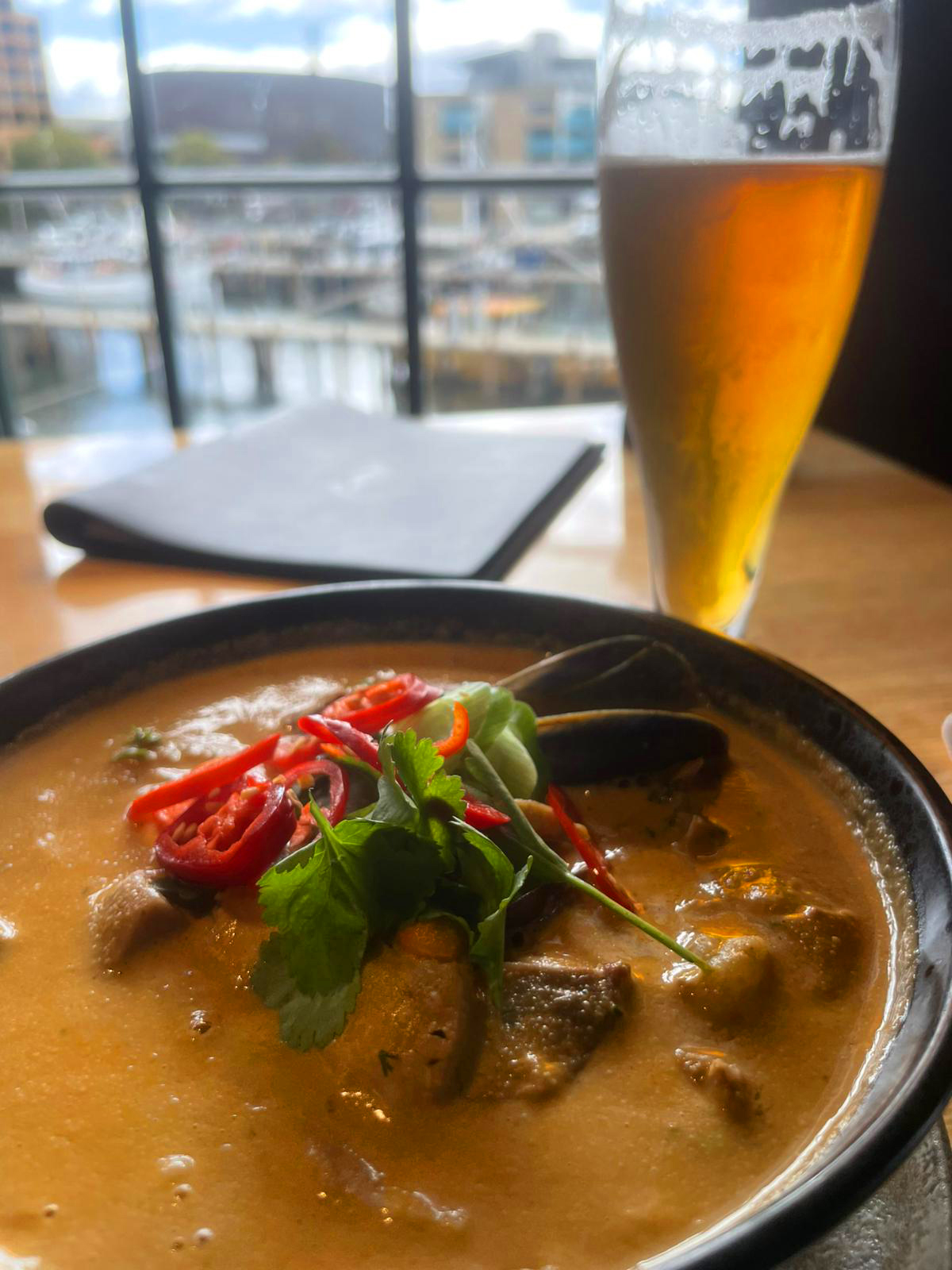 |
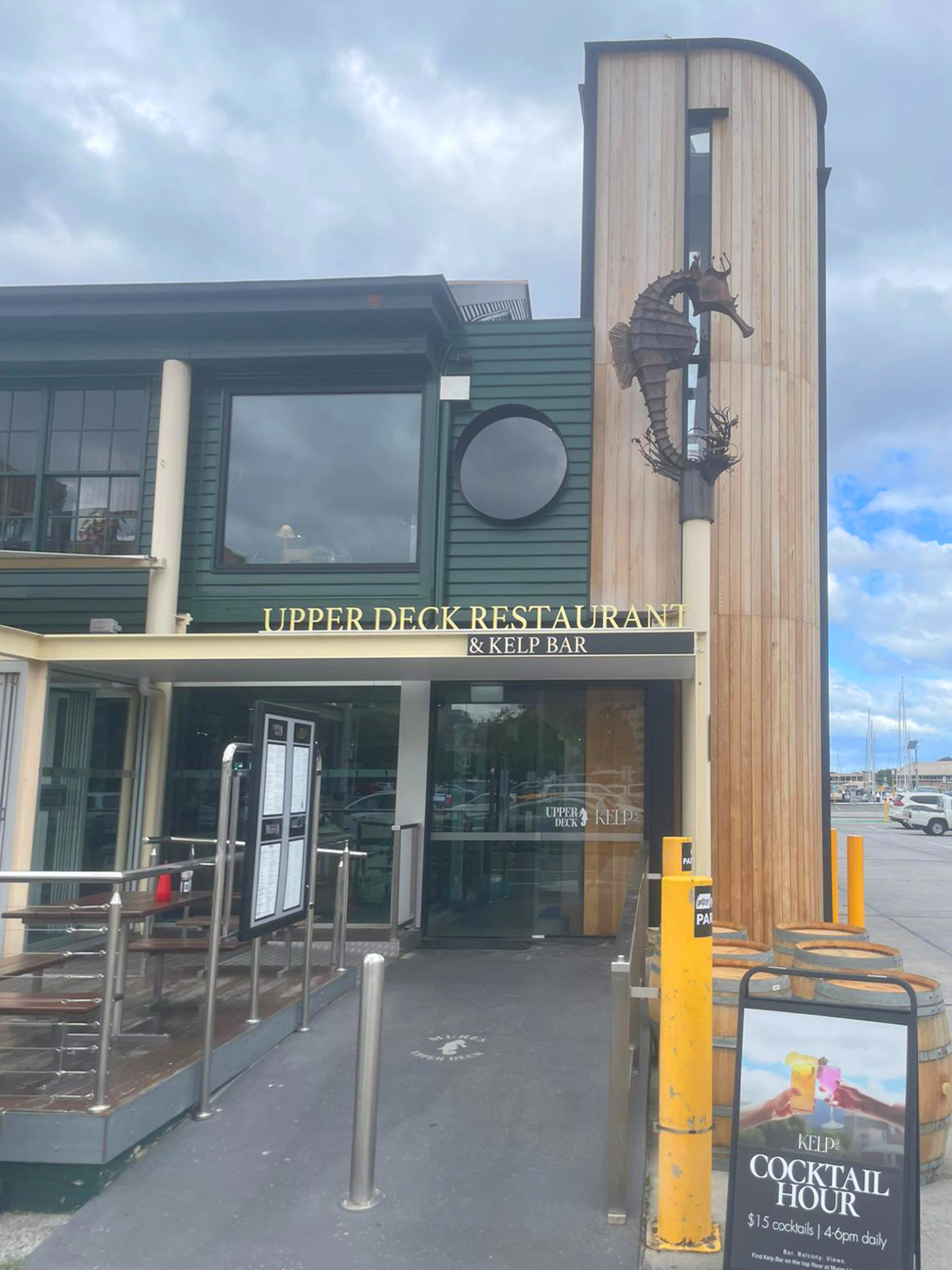
| Mures Upper Deck : seriously delicious Seafood Laksa 10/10 |
 |
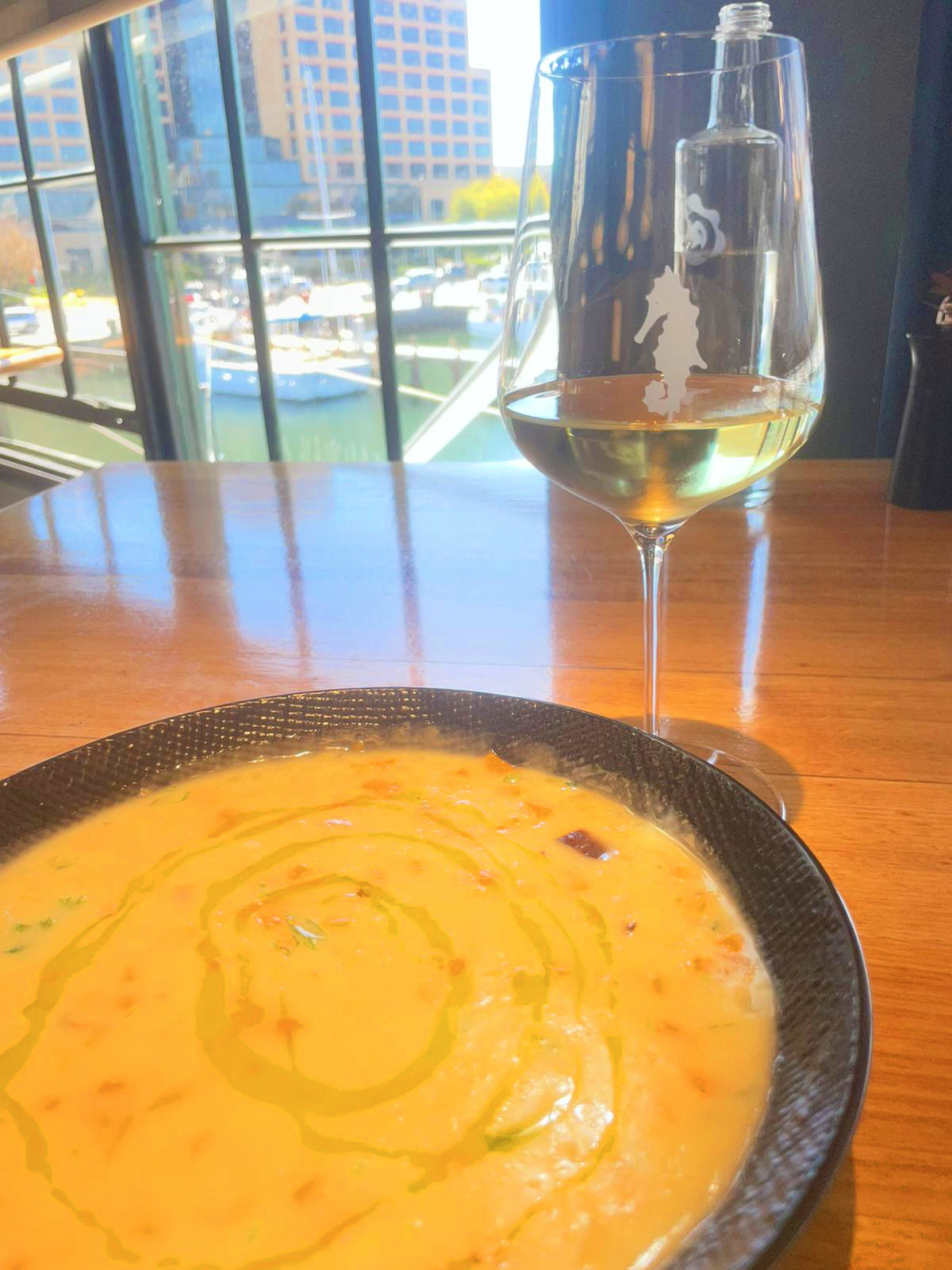 |
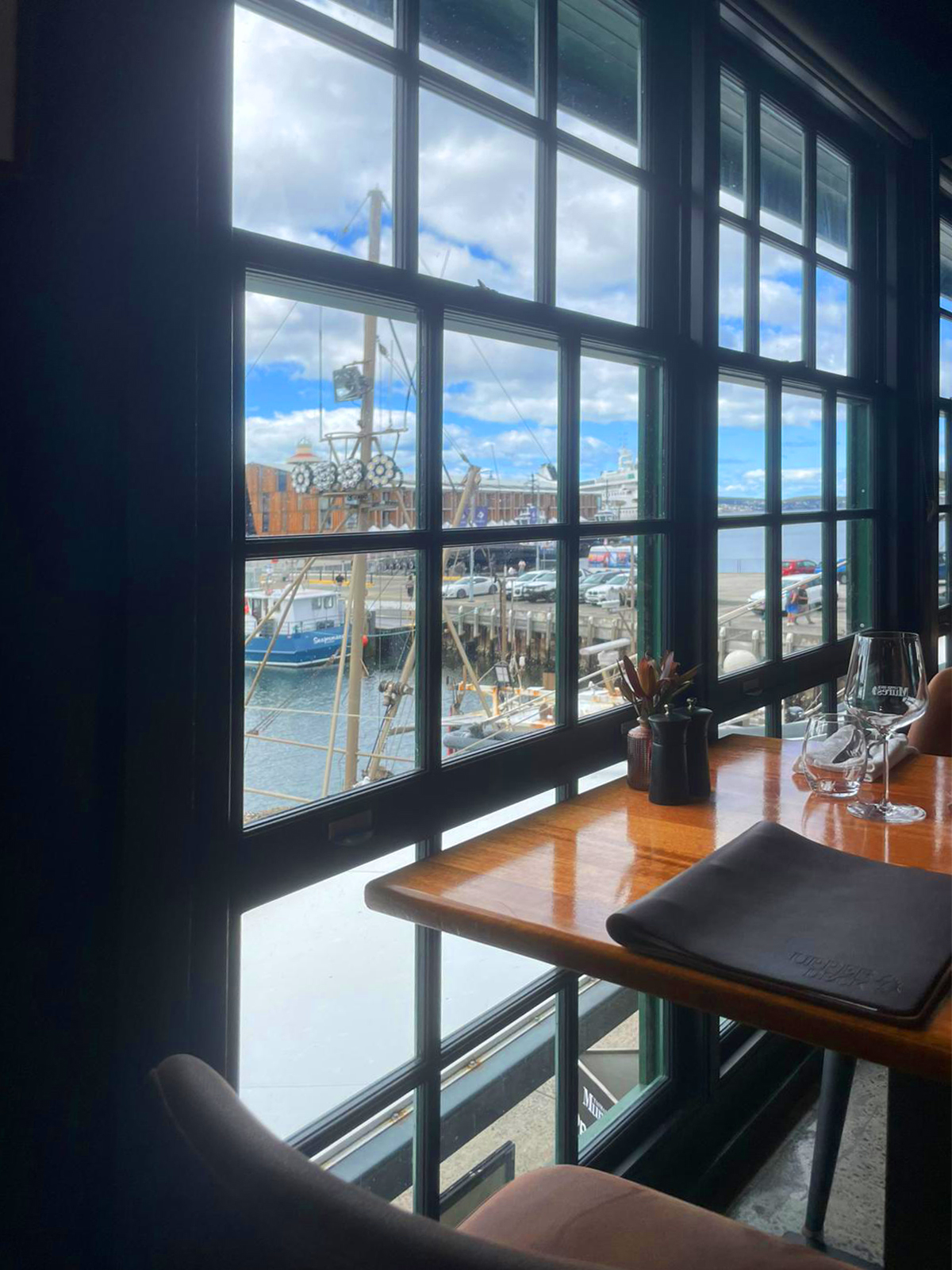
| Next Day : Chowder + Sav Blanc 9/10 |
|
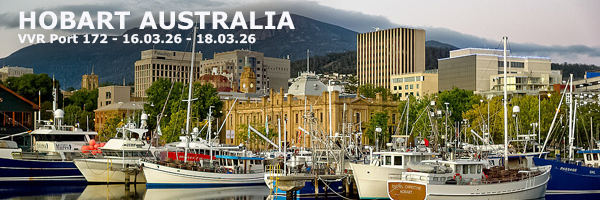
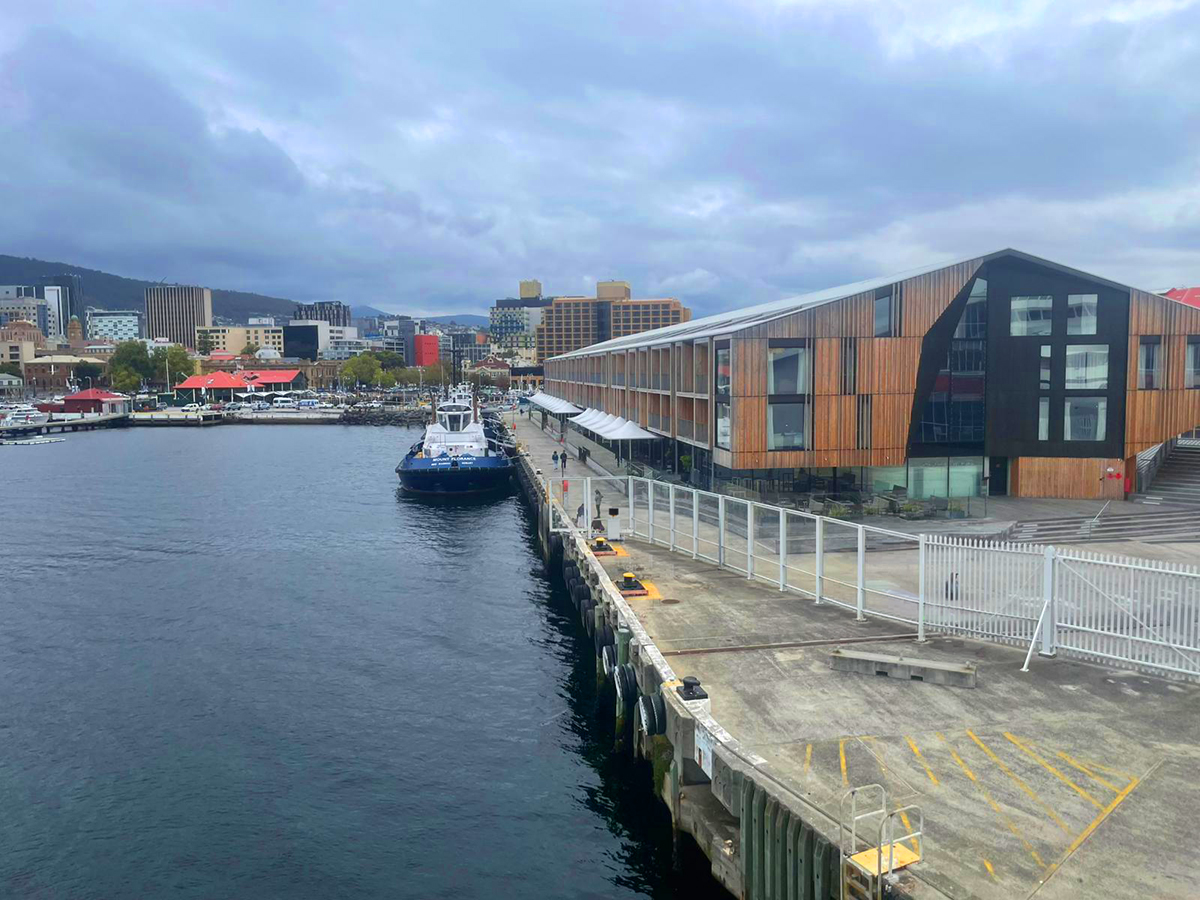
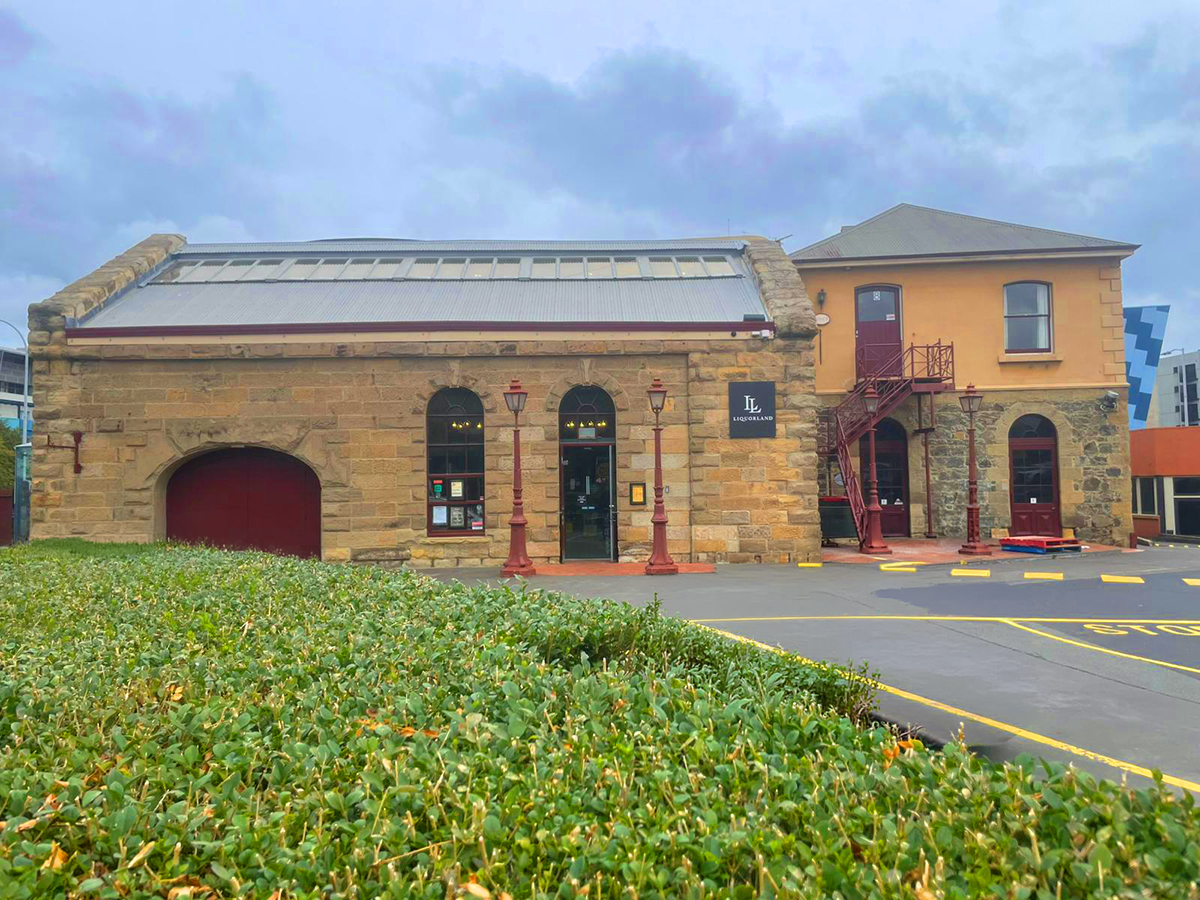
March 16-18, 2026 Marti Eicholz The Odyssey’s voyage from Melbourne to Hobart is a storied journey, beginning with the departure from the bustling cityscape of Melbourne and setting out into the open waters of Bass Strait. As the ship leaves Port Phillip Bay, sweeping views of the city skyline slowly fade into the horizon, ushering the Odyssey into the notorious strait. Throughout the crossing, we encounter everything from tranquil, glassy seas to churning swells and gusty winds, a testament to Bass Strait’s formidable reputation. The air is charged with prospect, as the Odyssey charts a course through unpredictable weather patterns and shifting waves, making every passage unique and memorable. Upon nearing Tasmania, the Odyssey turns south to approach the expansive mouth of the Derwent River via Storm Bay. Here, the scenery transforms dramatically as rugged coastlines give way to green, rolling hills, with the silhouette of Mount Wellington rising in the background. The ship then embarks on a picturesque 22-kilometer (13.6 mile) journey upriver, where the deep waters of the Derwent offer both shelter and a sense of arrival. With each riverside landscape passing by, excitement builds, knowing we are nearing Hobart’s historic heart. Docking at Macquarie Wharf in Sullivans Cove, the Odyssey finds itself in the midst of Hobart’s vibrant waterfront. The city’s working harbor atmosphere comes alive, with Antarctic supply ships and colorful fishing boats sharing space with us. We disembark just steps from the lively city center, surrounded by bustling cafes, renowned seafood punts, and the charming waterfront, eager to explore all that Hobart has to offer. Hobart, the capital city of Tasmania, Australia, stands as the second-oldest capital in the nation. Situated on the southeastern coast, it stretches along the broad estuary of the River Derwent. The city is uniquely positioned between the tranquil waters of the river and the imposing presence of kunanyi/Mount Wellington, which rises to 1,270 meters (4166.8 feet) and forms a dramatic backdrop to Hobart’s urban landscape. The area’s rugged hills, dolerite rock formations, and deep-water harbor have played a pivotal role in the city’s maritime history, shaping its identity over centuries. Greater Hobart is home to approximately 248,000 to 250,000 residents, making it a vibrant, historic, and compact urban center. The city experiences a mild, temperate maritime climate marked by four distinct seasons. Despite its coastal location, Hobart receives relatively little rainfall, making it the second-driest capital in Australia. Winters are cool but not extreme, and the overall weather is often milder than many would expect. Although Hobart is sometimes thought of as cold, its latitude, around 40 degrees south, places it closer to the equator than Rome is to the North Pole, highlighting its temperate conditions and inviting atmosphere. Tucked away on the southeastern coast of Australia, Hobart stands as a city where striking natural beauty meets a rich, layered past. As the second-oldest city in the nation, its origins trace back to 1804, when it was first settled as a penal colony. Those early days set the stage for a community shaped by resilience and tenacity, paving the way for the vibrant metropolis it is today. Just a year after Sydney’s establishment, Hobart began to grow at the mouth of the Derwent River, a location chosen for its strategic advantages and destined to become a hub of culture and innovation. Unlike the more recently founded cities of Melbourne, Adelaide, and Perth, Hobart’s early history is steeped in tales of convicts and colonial ambition. Many of its iconic sandstone warehouses, particularly in the Salamanca area, stand as a testament to the labor of those first settlers. Their enduring walls, chiseled from local stone by convict hands, now house bustling cafés, galleries, and markets, offering a unique glimpse into the city’s transformation from penal outpost to cultural jewel. Today, Hobart is defined as much by its dramatic scenery as by its storied past. The city is nestled at the base of majestic kunanyi/Mt Wellington, whose slopes cradle neighborhoods and provide a breathtaking backdrop visible from almost any point in town. This mountain is not just a scenic wonder; its presence shapes the city’s weather, lifestyle, and even its festivals, drawing you to its trails and lookout points. But Hobart’s appeal doesn’t stop at its landscape or colonial architecture. It is a place where the old and new collide, home to the provocative Museum of Old and New Art (MONA), the largest privately funded museum in the Southern Hemisphere. MONA’s underground galleries have captured the imagination of art lovers worldwide with their bold, thought-provoking exhibitions, avant-garde installations, and sometimes controversial displays. This fusion of history, art, and natural beauty makes Hobart an inspiring destination. Known as the gateway to Antarctica, Hobart is a crucial launching point for international polar research and expeditions. Ships bound for the icy continent often depart from its busy harbor, reinforcing the city’s role as a bridge between worlds, between past and future, between temperate Tasmania and the remote Southern Ocean. The city’s maritime heritage is further highlighted by dramatic events such as the 1975 collision of a bulk ore carrier with the Tasman Bridge, an accident that briefly isolated the eastern suburbs and remains etched into local memory. Not to be overlooked is Hobart’s legacy as a brewing capital. At the foot of Mt Wellington sits the Cascade Brewery, Australia's oldest operating brewery, founded in 1824. Its historic façade and lush gardens attract beer aficionados from around the globe, offering a taste, quite literally, of the city’s enduring traditions. And beyond the breweries, Tasmania itself is famed for the world’s cleanest air, measured at nearby Cape Grim, which draws environmentalists and scientists keen to study the island’s pristine atmosphere. The mysteries of Tasmania’s wildlife also find a focal point in Hobart. The last known Tasmanian Tiger, or thylacine, died in the city’s Beaumaris Zoo in 1936, leaving behind a legacy of wonder and longing that still captures the imagination of scientists and dreamers alike. Add to that Tasmania’s historical moniker as the “Apple Isle,” once a global leader in apple production, and you have a city whose story is as rich and varied as the landscapes that surround it. Meanwhile, the city’s culinary scene continues to evolve, with innovative restaurants and markets celebrating local bounty. I was told that on a Saturday morning the Salamanca Market is lively. The historic sandstone warehouses come alive with local vendors selling handmade crafts, gourmet foods, world-renowned seafood, crisp cool-climate wines, and fresh produce. The market’s energetic atmosphere is complemented by live music and street performers, creating a festive environment perfect for mingling with locals. Perhaps on our second time around we will be in Hobart on a Saturday. Wander the charming streets of Battery Point, a suburb brimming with colonial-era cottages, quaint cafes, and historic pubs. This picturesque area invites you to step back in time, explore hidden laneways, and enjoy afternoon tea in a cozy setting. For nature lovers, a drive or hike to the summit of kunanyi / Mount Wellington is a must. The panoramic views over Hobart and the Derwent River are simply spectacular, and the mountain’s walking trails offer the chance to encounter native flora and the famous “Organ Pipes” rock formations. Take a peaceful break at the Royal Tasmanian Botanical Gardens, located just outside the city center. These gardens showcase rare and cool-climate plants in beautifully landscaped grounds, offering a tranquil escape and the opportunity to learn about Tasmania’s unique botanical heritage. To deepen our understanding of the island’s past, the Tasmanian Museum and Art Gallery present engaging exhibits on local history, art, and wildlife, making it a rewarding stop for curious minds. Hobart, Australia, is a city where every street, building, and view tells a vivid story of survival, creativity, and discovery. As you wander its historic docks, sample freshly shucked oysters, and marvel at cutting-edge art, you find yourself immersed in a living narrative that is uniquely Tasmanian. The city offers an enticing blend of rich history, vibrant culture, iconic landmarks, lively markets, and charming neighborhoods. As the gateway to the renowned Tasmanian Wilderness World Heritage Area, Hobart promises breathtaking natural scenery and memorable adventures at every turn. Hobart evokes a powerful sense of tranquility and inspiration, as if time itself slows to let you savor every detail, the bracing clarity of the air, the gentle hum of the waterfront, and the creative energy that pulses through the city. The interplay between historic sandstone streets and the crisp, ever-changing light from mountain and river lends a subtle magic to every moment. Here, you feel grounded yet uplifted, welcomed by the warmth and unhurried friendliness of locals. There’s an undeniable romance to Hobart, the rugged mountains meeting the sea, bustling markets, and a welcoming spirit that invites both introspection and adventure. It’s a city that encourages you to find your own rhythm, to embrace both serenity and excitement, making your visit unforgettable. With those feelings etched in memory, it’s time to move on. As the Odyssey sets sail, we carry with us the calm, creativity, and sense of possibility that Hobart so generously offers, ready to greet whatever lies ahead on this journey. |
|
Copyright © 2026 All rights reserved |