|
|
 |
|
|
 |
 |
 |
 |
 |
 |
 |
 |
 |
 |
 |
 |
 |
 |
 |
|
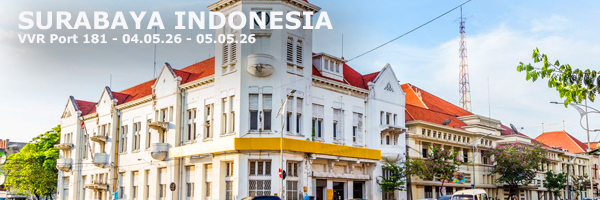
May 4-5, 2026 Marti Eicholz Embarking on the Odyssey from Bali, we are treated to a unique maritime experience as the vessel sets sail from the vibrant Port of Benoa, gradually leaving the lush island landscape behind. The journey across the Java Sea offers sweeping views of Indonesia's coastline, with tranquil waters shimmering under the tropical sun. As the Odyssey traverses this route, we enjoy a day at sea, making the most of onboard amenities while the ship navigates both calm stretches and occasionally livelier patches. Approaching Surabaya, the Odyssey enters busier shipping lanes and shallower waters, requiring precise navigation as the city’s bustling port comes into view. The crew prepares for docking by coordinating with harbor authorities, adjusting speed, and monitoring currents, especially around the Bali Strait and near Nusa Dua, where conditions can shift quickly. As the ship glides toward the pier, panoramic views of Surabaya’s skyline and the working harbor mark a memorable arrival. The Odyssey is securely moored and cleared for disembarkation. The name Surabaya is derived from the words sura (shark) and baya (crocodile), representing a legendary battle between these two creatures for dominance over the region. In Surabaya, the air itself seems to shimmer with the promise of flavor, a city where every street corner hums with the sizzle of grilling satay, and the scent of spices floats on the breeze. The food scene is not merely an aspect of the city; it is its heartbeat, pulsing through bustling markets and quiet alleyways. To wander here is to embark on a culinary journey, each bite a poetry of spice, texture, and tradition. Sampling Rujak Cingur, with its medley of crisp vegetables and the enigmatic depth of petis sauce, is like tasting history, earthy, bold, and layered with stories untold. The first sip of Rawon reveals a soup as dark as midnight, rich with the mystery of kluwek nut and tender chunks of beef, warming the soul with each mouthful. Street vendors beckon, their offerings endless, each plate crafted with care and brimming with the vibrant life of Surabaya. To eat here is to become part of the city’s rhythm, savory, spicy, and unforgettable. In every meal, there is a celebration, a weaving together of tradition and innovation, of joy and memory. Surabaya’s food is more than sustenance; it is a song sung by generations, inviting travelers and locals alike to savor, linger, and fall in love with every bite. Surabaya surprised me in a quiet, steady way, not with one big moment, but with the feeling of a city that knows exactly who it is. Indonesia’s second-largest city is busy and warm and a little rough around the edges, and yet it carries its pride, a strong sense of history as Kota Pahlawan—the “City of Heroes.” Between modern boulevards, riverfront warehouses, and neighborhoods shaped by centuries of trade, I moved through the streets, like the past was never far away. I started my day at Tugu Pahlawan, The Heroes Monument, and even before going into the museum, the place felt solemn, open space, tall monument, shaped like an upside-down nail to symbolize the sharp, unwavering resolve of the people, the kind of silence you notice even in a loud city. Inside, I took my time with the exhibits, reading more than I expected to. It wasn’t just history on the wall; it felt like a reminder of how much Surabaya has had to fight for, and how fiercely people still hold on to that story. After that I went to the House of Sampoerna, mostly because I wanted to see the old building and I’m glad I did. The colonial architecture is beautiful in that slightly haunting way, polished but heavy with time. I learned about kretek (clove cigarettes) and the business history tied to it, and watching the careful, repetitive work made me weirdly emotional. It’s one thing to read about an industry; it’s another to see the human rhythm behind it. Later I wandered through Surabaya’s Old Town and didn’t really have a plan, just walked until something made me stop. Some buildings looked tired, some looked stubborn, and a few corners suddenly felt cinematic, like a scene that’s been waiting there for decades. Around the Jembatan Merah area, I tried to imagine the city when the river and the port were everything. The air felt different there, more layered, like it carried old conversations. In the middle of all that history and walking, Monumen Kapal Selam (Monkasel) felt like a sudden plot twist. I climbed into a real retired Russian submarine that served in the Indonesian Navy and instantly understood how cramped life inside must have been, tight corridors, low ceilings, everything practical and close. It was oddly fun (and a little claustrophobic), and I came out blinking in the daylight like I’d just stepped out of another world. Quirky, memorable and perfect when you want something hands-on between museums and neighborhood walks. I made my way to Ampel, where Surabaya’s trading history is still alive in the streets. The streets felt alive in a completely different way, narrower, denser, full of small shops and people who seemed to know exactly where they were going. Walking through the Arab Quarter was a serene highlight. It led me to the Sunan Ampel Great Mosque, one of the city’s most important religious sites, surrounded by small shops selling perfumes, prayer items, snacks, and textiles. The atmosphere was calm but busy, reverent, but every day. Nearby, Surabaya’s Chinatown added another layer, old shophouses, food smells drifting out, and that feeling of a city built from many arrivals and many stories. As the Odyssey prepares to cast off, I stand on the deck watching Surabaya recede into memory, reflecting on some of the unique aspects of Surabaya that truly stand out for me, like the city’s diverse architecture, revealing a fascinating blend of historical influences, from colonial buildings to Chinese and modern styles. One remarkable example is the Klenteng Sanggar Agung temple, which sits by the sea and features a striking statue of Guan Yin that seems to greet as we approach and depart. Taman Bungkul is a lively park at the heart of the community. It’s more than just a green space; it’s a gathering place where locals come together to skate, enjoy delicious snacks from food stalls, and connect to free public Wi-Fi. The dynamic atmosphere here embodies the vibrant spirit of Surabaya and reminds me of the importance of community spaces in urban life. As the Odyssey glides away, I feel a quiet anticipation for the open water ahead. Two days at sea stretches before us, time to let the city’s impressions settle and shift, to listen to the rhythm of waves, and to wonder what stories the next port might hold. There’s something about leaving land behind that sharpens the sense of what you’re carrying with you, and as the city lights fade, I realized Surabaya would stay with me and it’s a city I almost skipped. |
|
Copyright © 2026 All rights reserved |