|
|
 |
|
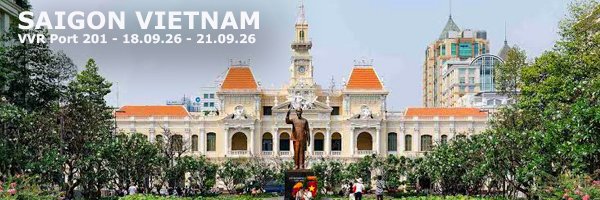
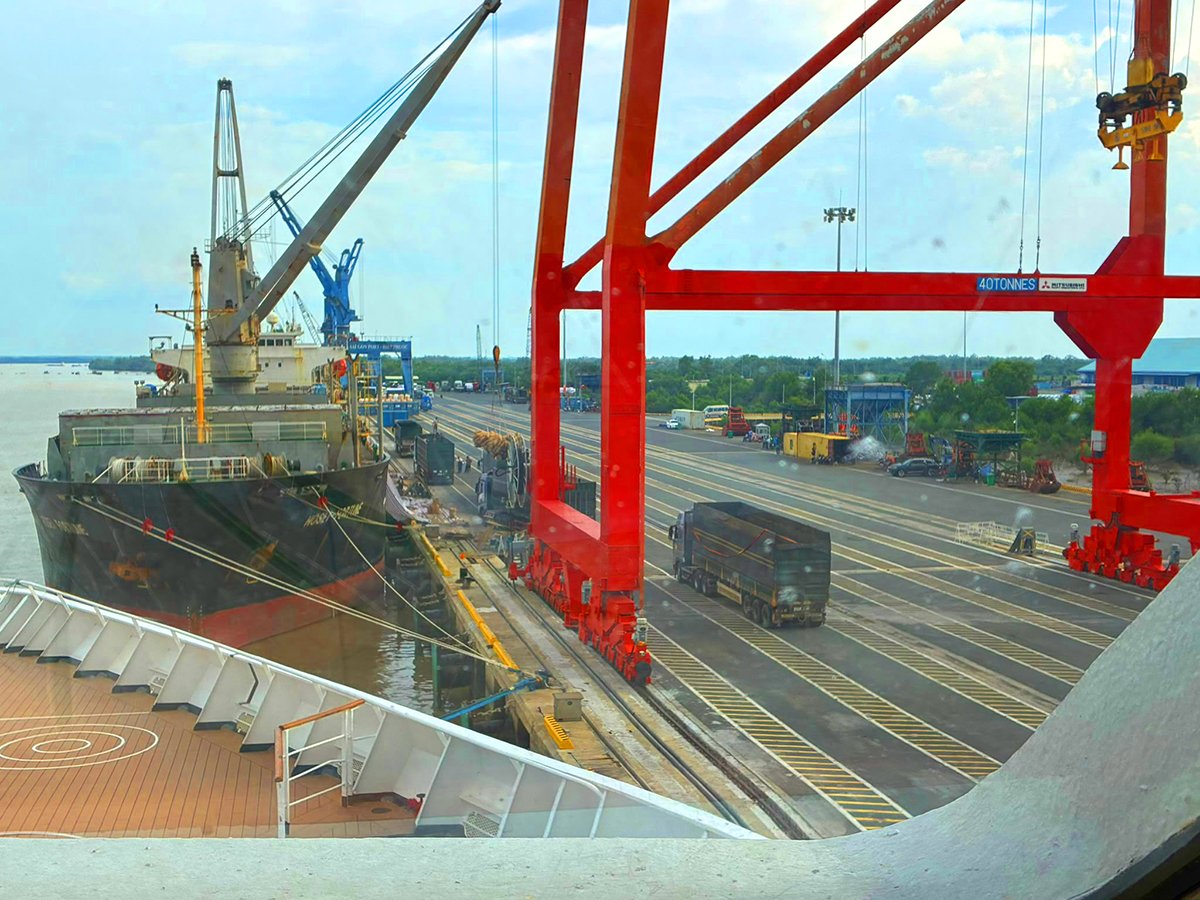
September 18-21, 2026 Marti Eicholz Saigon, Beneath the Names After five days at sea, land returned first as a rumor: a dark seam beneath the morning haze, a scatter of cranes, the faint green-brown pull of the river. The Odyssey followed the Saigon River inland and eased alongside a port, still an hour’s shuttle ride from the heart of the city. Deck rails filled with passengers. Some spoke eagerly of flights onward, beaches, temples, and the Mekong Delta. I stayed quiet, watching the water wrinkle around us, knowing that Ho Chi Minh City, or Saigon, as so many still call it, waited beyond the port and the long road into town. Even before I reached its streets, the city carried several lives within its names. Before Ho Chi Minh City, before Saigon and Gia Dinh, there was Prey Nokor—Forest City—a Khmer fishing settlement gathered near the waterways. These earlier identities do not lie neatly atop one another; they show through like old paint beneath a newer color. Official signs tell one version of history, while shopkeepers, taxi drivers, and café conversations often preserve another. “Saigon” survives not as defiance so much as intimacy: a word worn smooth by the mouth. An hour later, after the shuttle threaded its way from the port toward the center, the city announced itself in layers of sound: horns chirping and pleading, engines rising in swarms, vendors calling from the shade. Motorbikes flowed around us like a school of bright fish, parting and closing with a logic invisible to the newcomer. At the curb I hesitated, waiting for an opening that never came. Then I stepped forward slowly, resisting the instinct to run, and the traffic curved around me. Crossing the street felt like an initiation, less an act of conquest than a small surrender to the city’s rhythm. Water has always shaped Saigon, even when crowded streets hide it from view. The broad brown river reaches inland through a web of canals, carrying commerce, silt, and rainwater. Because the land is low and near level, a sudden downpour can fill the gutters and turn the streets briefly reflective. Then the rain passes. Plastic stools reappear, ponchos are shaken out, and daily life resumes. The city’s history was equally visible in its architecture. In District 1, pale colonial façades stood beneath tamarind trees: the Central Post Office with its vaulted interior, the opera house keeping its theatrical poise, old hotels facing the river. Nearby, towers of glass caught the sun and returned it with a harder brilliance. Nothing had politely made way for what followed. Rather than replacing one era with another, Saigon seemed to have kept every century in the room, each speaking over the others. The next morning, I left the brightness of District 1 for Cu Chi. Beyond the dense districts, the road loosened into a greener landscape. Rubber trees stood in measured rows; roadside houses opened toward the traffic; laundry moved in the warm air. The ordinary peace of the journey was difficult to reconcile with the history beneath it. I had read that the tunnels formed an underground world of passages, kitchens, sleeping chambers, clinics, and meeting rooms. Knowledge on a page, however, has clean margins. A place does not. At the entrance, our guide lifted a small wooden hatch concealed by leaves. The opening looked scarcely wider than a pair of shoulders. One by one, visitors lowered themselves into the earth and vanished. When my turn came, I placed my feet on the narrow ledge, raised my arms, and sank into darkness. The ground closed around my ribs. Roots knuckled through the ceiling. Even in a section widened for visitors, I had to crouch and shuffle, palms brushing packed soil, my breath suddenly loud. For a few minutes, discomfort became panic’s quiet cousin. I knew daylight waited nearby and that I could emerge whenever I wished; that knowledge was its own privilege. The people who had lived and moved here endured heat, hunger, insects, bombardment, and the constant labor of secrecy. Their ingenuity could not be separated from the terror that required it. I came out blinking, streaked with red earth, my relief at standing upright shadowed by what the earth had held. By the time I returned to Saigon, evening had gathered gently over the boulevards. At a narrow café, a woman set a metal filter over my glass and left time to do its work. Coffee descended drop by deliberate drop, black and glossy, into condensed milk. Around me, conversations overlapped; spoons chimed against glass; a business meeting unfolded at one table while students bent over phones at another. The drink was startlingly rich, bitter, sweet, cold with ice, and it returned me to the present. The city offered other small restorations. Steam rose from bowls of pho. A baguette cracked beneath my teeth, scattering crumbs over paper. Herbs sharpened the air; grilled meat smoked at the edge of an alley; translucent rolls held shrimp and mint. At a pagoda, coils of incense hung overhead, their smoke writing and unwriting itself. Different traditions met there without the clean boundaries a guidebook prefers. Devotion seemed less a category than something carried quietly from one altar to the next. On our final morning, back aboard the Odyssey at her berth on the Saigon River, I watched sunlight move across the brown water as our mid-afternoon departure drew closer. The city lay an hour away by road but remained vivid in memory, and the four days that had seemed generous on arrival now felt like the briefest permission. Saigon resisted any simple division between old and new: the underground corridor beneath the mirrored tower, the old name inside the official one, incense threaded with exhaust, memory carried forward in the restless life of the streets. By mid-afternoon, the Odyssey eased away from the berth, and the working port receded beneath a high, hazy sky. Yet the tunnels stayed with me: their closeness, their darkness, the shock of open air afterward. Travel is often praised for widening the world. Sometimes its truest work is the opposite: it narrows our attention to one low passage, one careful breath, one human body moving through earth. If we are attentive, we return not wise enough to speak for a place but humbled enough to listen when it speaks in more than one name. |
|
Copyright © 2026 All rights reserved |