|
|
 |
|
High winds and waves has resulted in our ship not being able to reach Falkland Islands. The ship will continue up the coast of Argentina, close to shore. |
 |
|
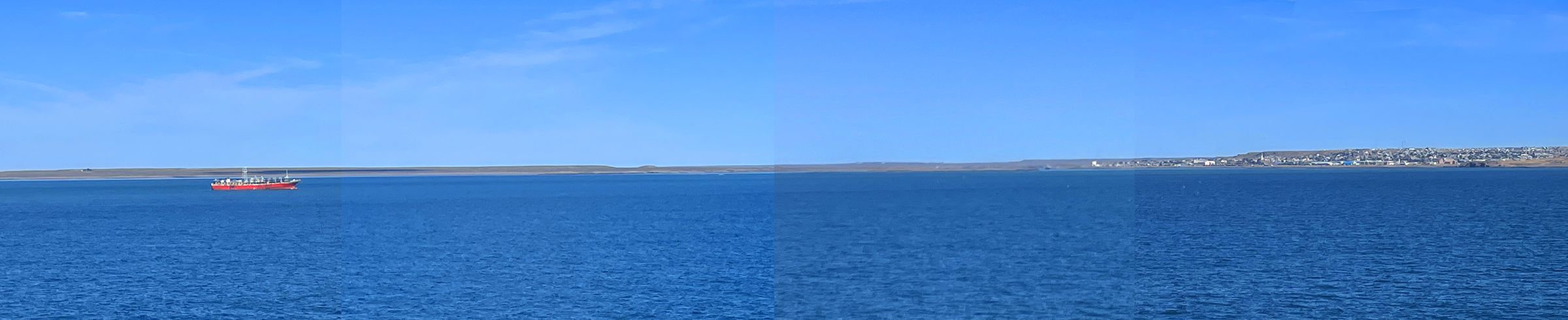
Anchored 4 miles off shore due to a broken down cargo ship unable to move from our spot to berth. |
|
Day 2: we depart early for Camarones Argentina, as the weather is not conducive for using the tenders. |
|
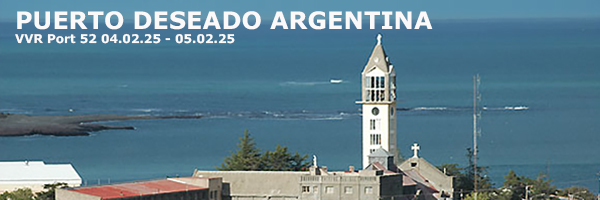
February 4–5, 2025 Marti Eicholz The dawn brings a refreshing sense of anticipation as The Odyssey approaches Puerto Deseado, Argentina, ready to unveil the day’s adventures. However, not every journey goes as planned. Today, a container ship has encountered mechanical difficulties and sits immobile at the pier, preventing The Odyssey from docking as scheduled. As a result, our ship must remain anchored in deeper waters, necessitating a transfer to shore using smaller vessels known as tenders. These tenders, often doubled as the ship’s lifeboats, tirelessly shuttle passengers between the anchored ship and the port, ensuring everyone’s safe passage. While this adds an element of challenge — particularly with a 50-minute ride across choppy seas — it also brings a sense of seafaring adventure to the day. Puerto Deseado, nestled in the province of Santa Cruz and home to around 20,000 residents, is a picturesque coastal fishing village. The town is situated on the northern edge of the Deseado estuary — a striking confluence where river waters mingle with the sea, creating a unique brackish environment. Estuaries like this support a wealth of biodiversity, with plant and animal communities uniquely adapted to the ever-changing mix of fresh and saltwater. The turquoise waters, set dramatically against the stark Patagonian desert, create a landscape that is both breathtaking and dynamic, recognized for its exceptional variety of life. Along the coasts, islands, and canyons, visitors may spot sea birds, playful dolphins, colonies of sea lions, and the iconic Magellan penguins that nest in this region. Traveling 26.7 miles inland from Puerto Deseado to the end of the estuary, adventurers will find “Darwin’s Camp” — a remarkable and secluded ranch that has been transformed into an ecolodge. This is the very site where Charles Darwin established his camp in 1833 during his historic explorations. Today, guests can retrace Darwin’s footsteps, embarking on expeditions by foot, four-wheel drive, or horseback to experience the wild beauty that once captivated the famed naturalist. The area is also home to ancient caves adorned with prehistoric paintings, some dating back seven thousand years, offering a window into the region’s distant past. The terrain surrounding Puerto Deseado is predominantly flat, punctuated by distant landforms resembling flattened buttes. In reality, these are remnants of long-extinct volcanoes, geological features born when the continents of Africa and South America began drifting apart roughly 130 million years ago. The city itself boasts historical treasures, such as the restored 1898 wagon displayed in the center of town — famous for its association with Facón Grande, a key figure in the “Rebellion of Patagonia.” Puerto Deseado is a destination that caters to a wide range of interests. Nature enthusiasts can explore vast sheep ranches, visit historic lighthouses, admire the stark beauty of petrified forests, and partake in unique sea kayaking experiences. Its combination of extraordinary biodiversity, cultural richness, and protected natural areas has earned Puerto Deseado the nickname “the Galapagos of Patagonia.” For those eager to connect with nature, the region offers three distinct Nature Reserves: Ría Deseado, Cabo Blanco, and Isla Pingüino. Each provides visitors with the opportunity to immerse themselves in the local environment, encountering diverse flora and fauna up close. Of particular note, the Ría Deseado has been designated an Intangible Natural Reserve. Its rare geography — where the river’s original path was overtaken by the sea — hosts an exceptional array of wildlife, making it a singular wonder in South America. Cabo Blanco Reserve spans an impressive 1,853 acres along the Argentine coast and stands out as a remarkable sanctuary dedicated to the preservation of both its rich plant life and diverse animal populations. This protected region is especially notable for sheltering the largest colonies of sea lions in Argentina, offering visitors an unparalleled opportunity to witness these majestic marine mammals in their natural habitat. Nearby, the Penguin Island Natural Reserve — known locally as Isla Pinguino — serves as a true gem of the area. Characterized by its rugged, rocky landscape, the island is the nesting ground for an incredible 30,000 Magellan penguins. Even more distinguished is its status as the only known colony of Rockhopper penguins in the region. These unique birds, famed for their striking yellow plumes, bristly golden eyebrows, and vivid red eyes, create a mesmerizing scene as you quietly observe their bustling 2,000-strong community on a small rocky islet encircled by the vast Atlantic Ocean. The island is also a haven for various seabirds such as seagulls, terns, oystercatchers, and skuas, alongside marine wildlife including sea lions, southern elephant seals, and four different species of cormorants. As you navigate the surrounding waters, you may be lucky enough to encounter Commerson’s dolphins. These small, visually captivating dolphins are renowned for their playful and inquisitive nature. Often, they’ll approach boats, delighting onlookers with close-up views of their agile movements as they frolic in the waves. Another highlight in the region is Monte Leon National Park, an expansive wildlife refuge covering 165,000 acres. The park is celebrated for its rich birdlife, thriving populations of Magellanic penguins, and a variety of terrestrial mammals. It’s a place steeped in history, once frequented by the legendary naturalist Charles Darwin in the 19th century, adding a layer of scientific significance to its natural allure. Turning to cultural attractions, the city proudly hosts the Mario Brozowski Regional Museum, which features a fascinating array of artifacts recovered from the HMS Swift. This British sloop of war met its fate in 1770, running aground and sinking in the harbor during a reconnaissance mission. After seeking refuge from a storm, the vessel was stranded on an uncharted rock when the tide went out. Although the tide eventually freed her, the ship ran aground again, ultimately sinking just 164 feet from the shore — a spot now close to the modern-day wharf. The museum brings this dramatic maritime episode to life through its well-curated exhibits. One of the city’s most unusual landmarks is the lighthouse church, whose tower features a continuously lit beacon maintained by the Navy. This distinctive structure blends religious and nautical heritage, making it a noteworthy point of interest for visitors. Recently, a malfunction aboard a container vessel prevented it from vacating the designated berth, which forced The Odyssey cruise ship to remain anchored offshore. This situation left the ship fully exposed to the Atlantic’s open waters and subjected it to constant swells. Yesterday, rough conditions made tendering particularly challenging, necessitating the simultaneous use of both main engines and the bow thruster to ensure passenger safety. The choppy seas caused discomfort and seasickness for those traveling in the tender boats. The weather forecast for today predicts fierce winds reaching 34.5 miles per hour and wave heights exceeding 8.2 feet — conditions deemed too hazardous for continued tender operations. Prioritizing the safety of residents and crew, the captain made the prudent decision to depart early for Camarones, Argentina, seeking a safer anchorage. This change in course underscores the importance of vigilance and adaptability when navigating the unpredictable waters of the South Atlantic. |
|
Copyright © 2025 All rights reserved |