|
|
 |
 |
 |
 |
 |
 |
 |
 |
 |
 |
 |
 |
 |
 |
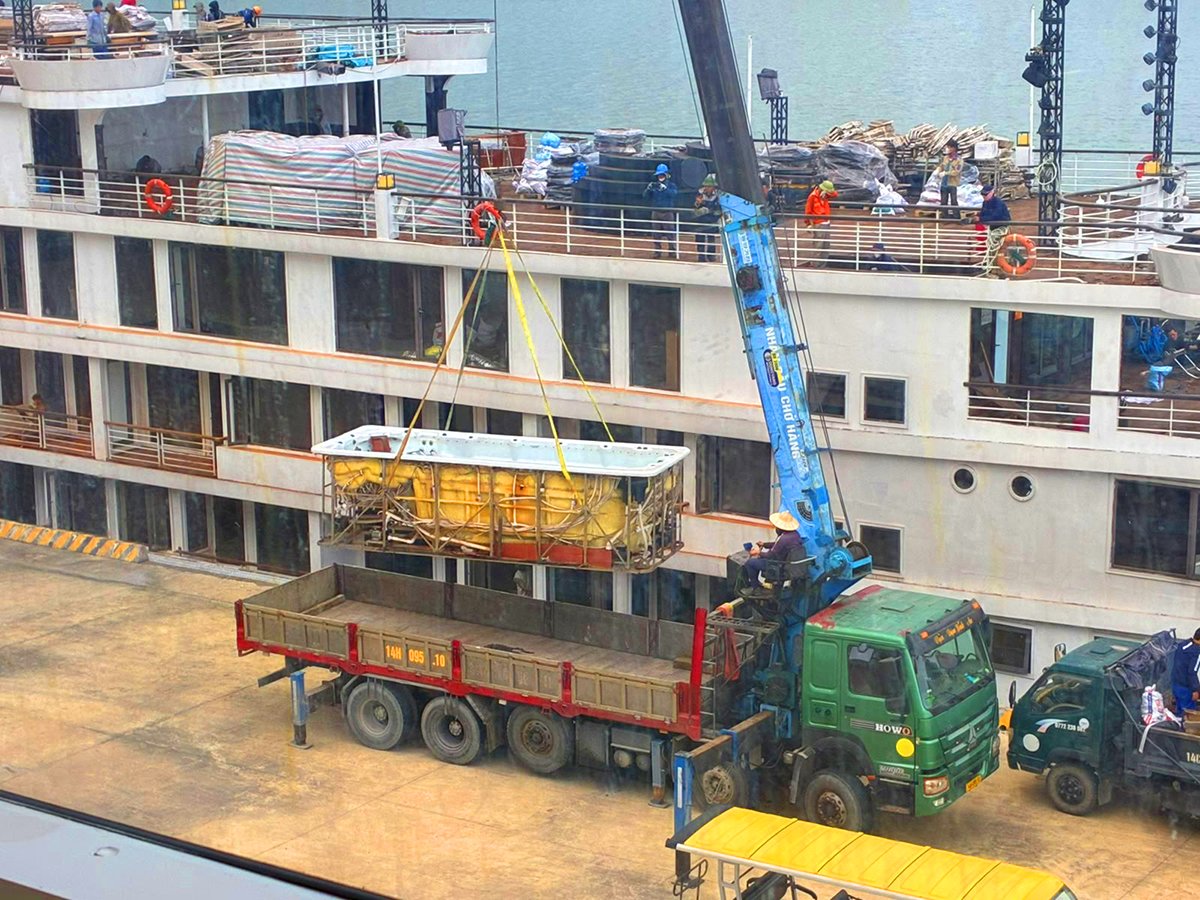 |
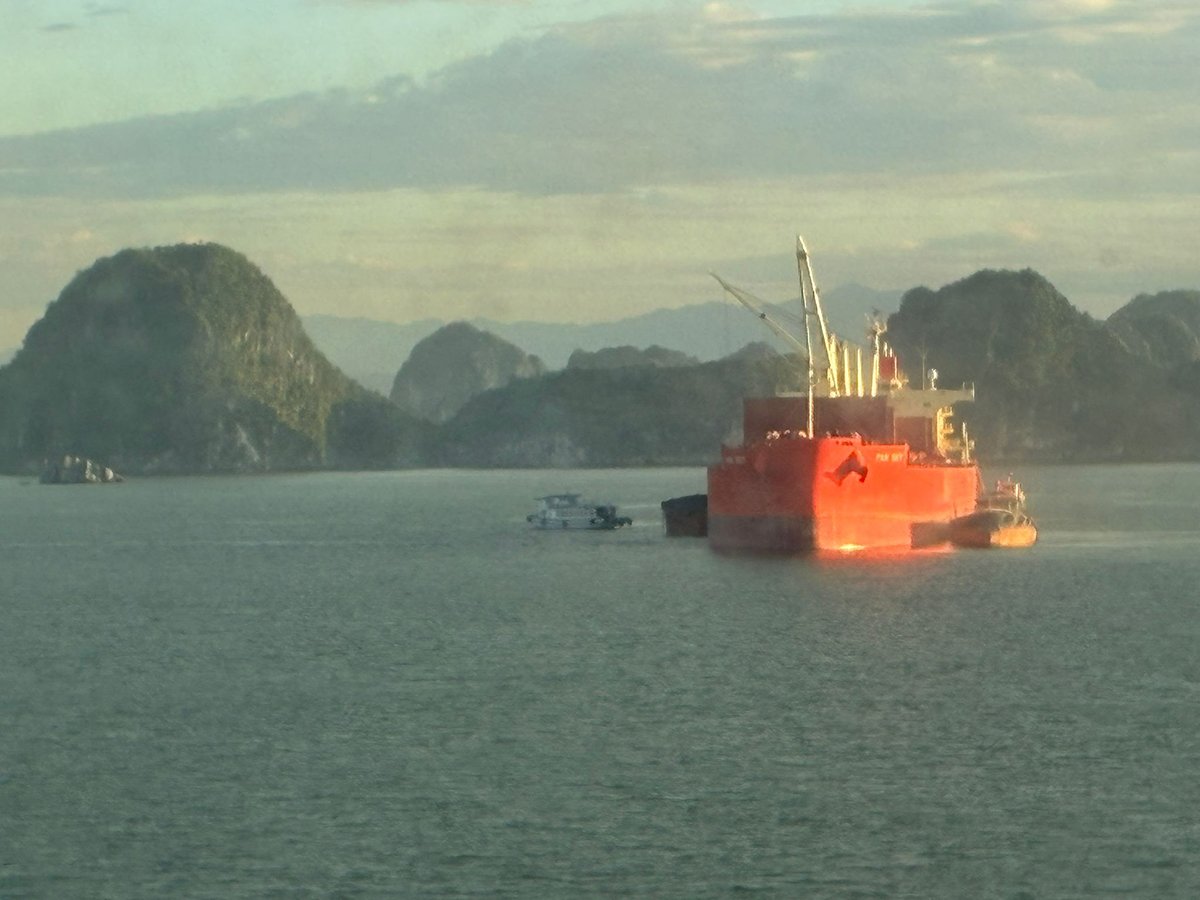
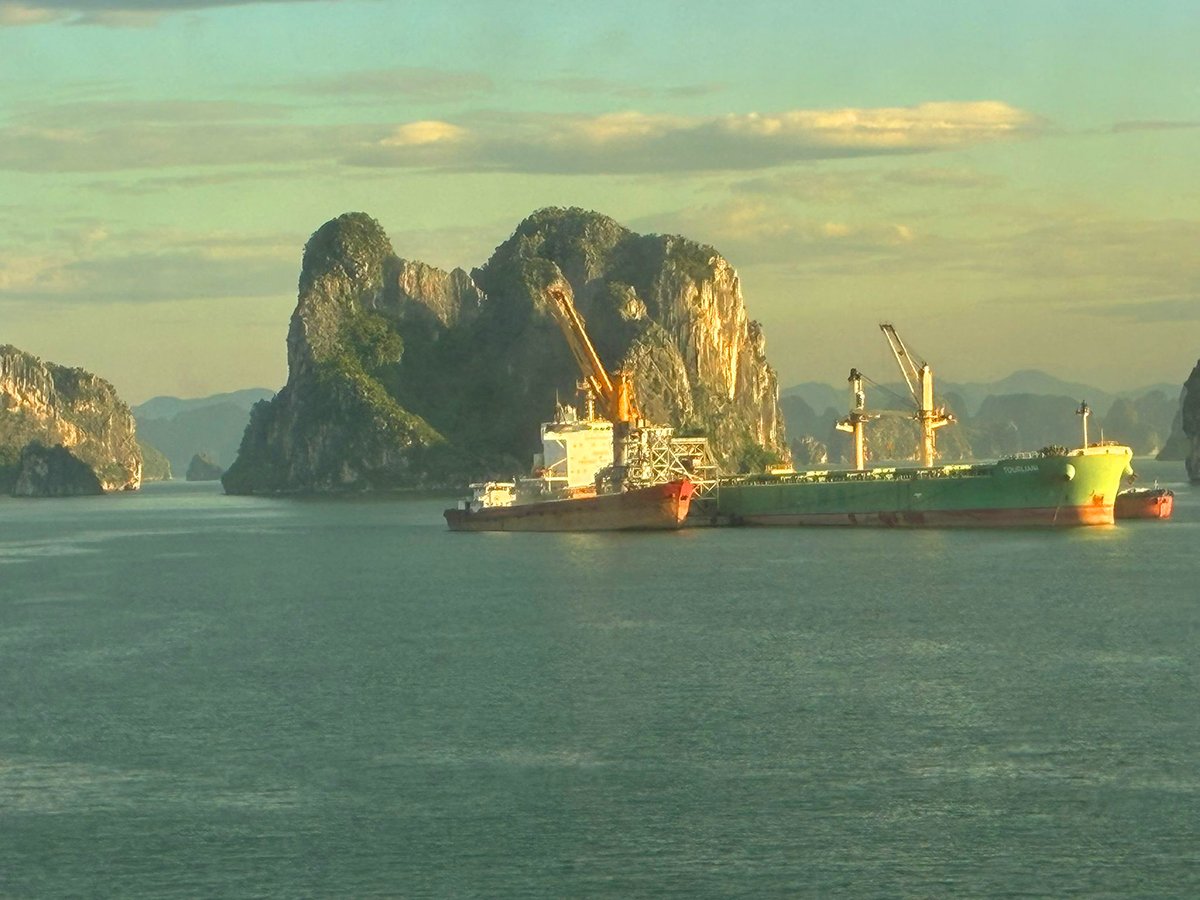
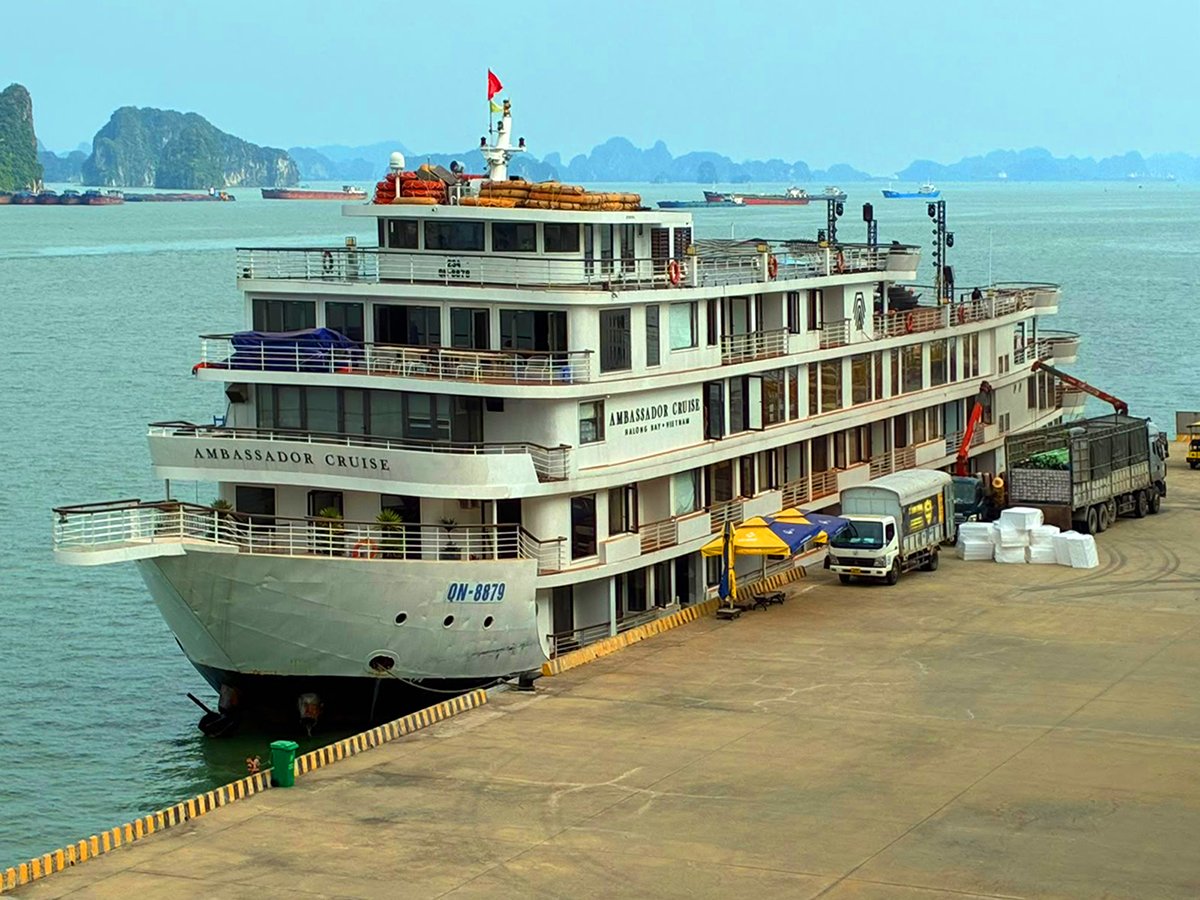
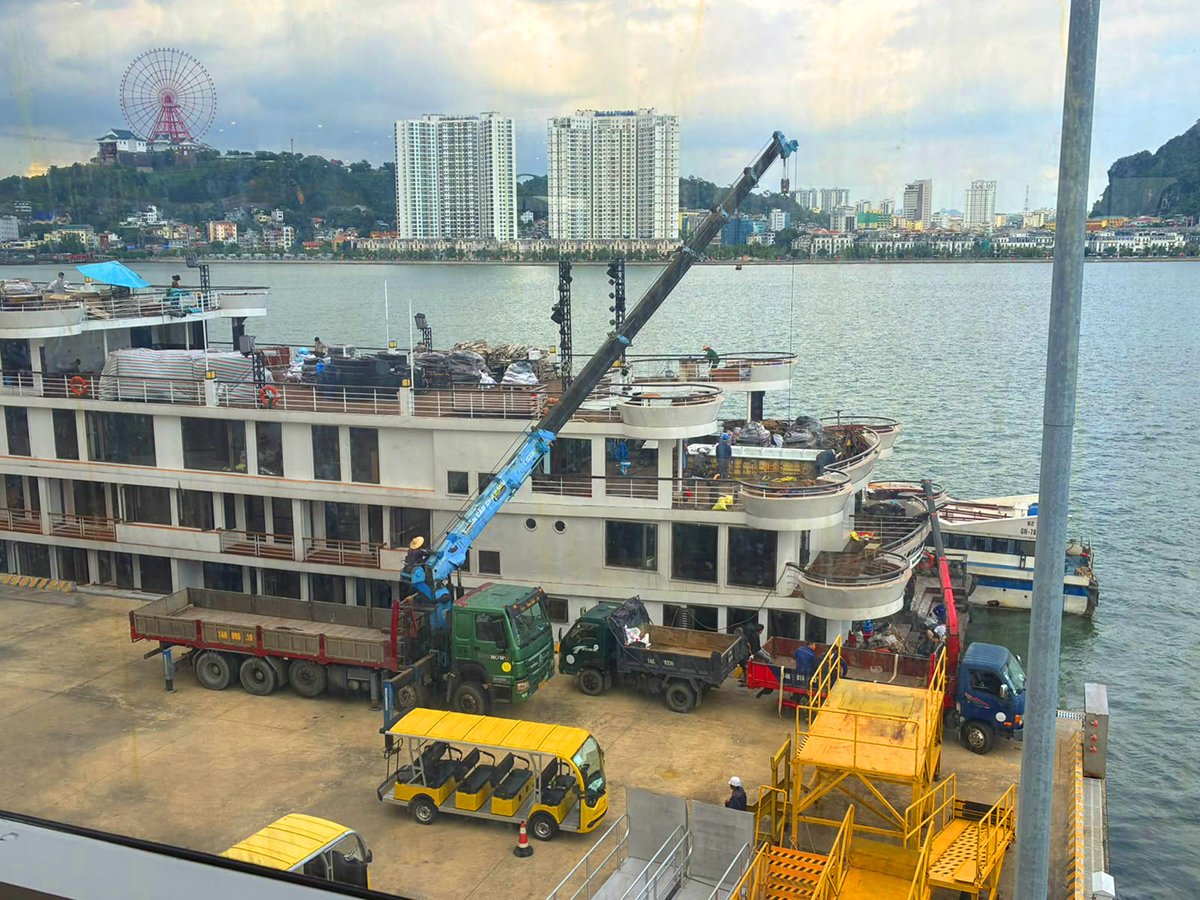
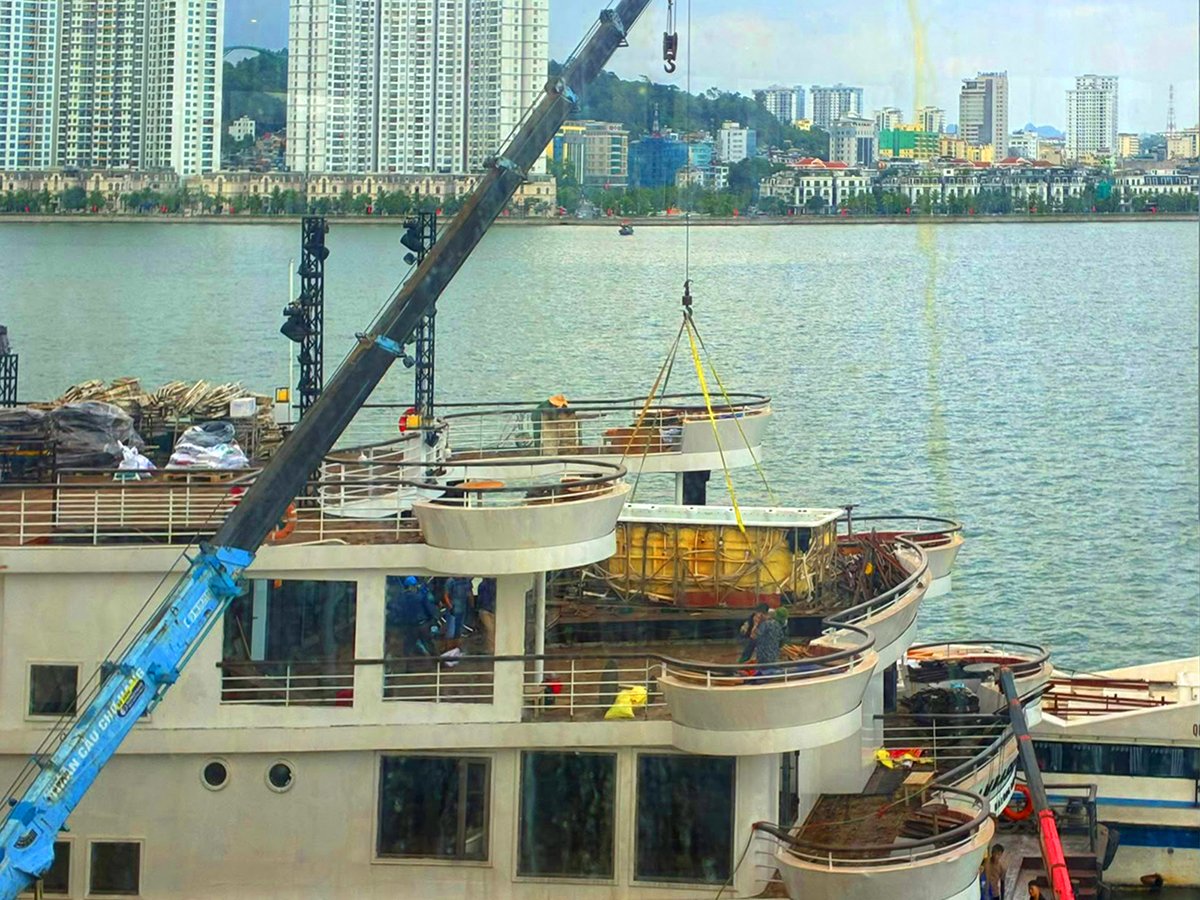
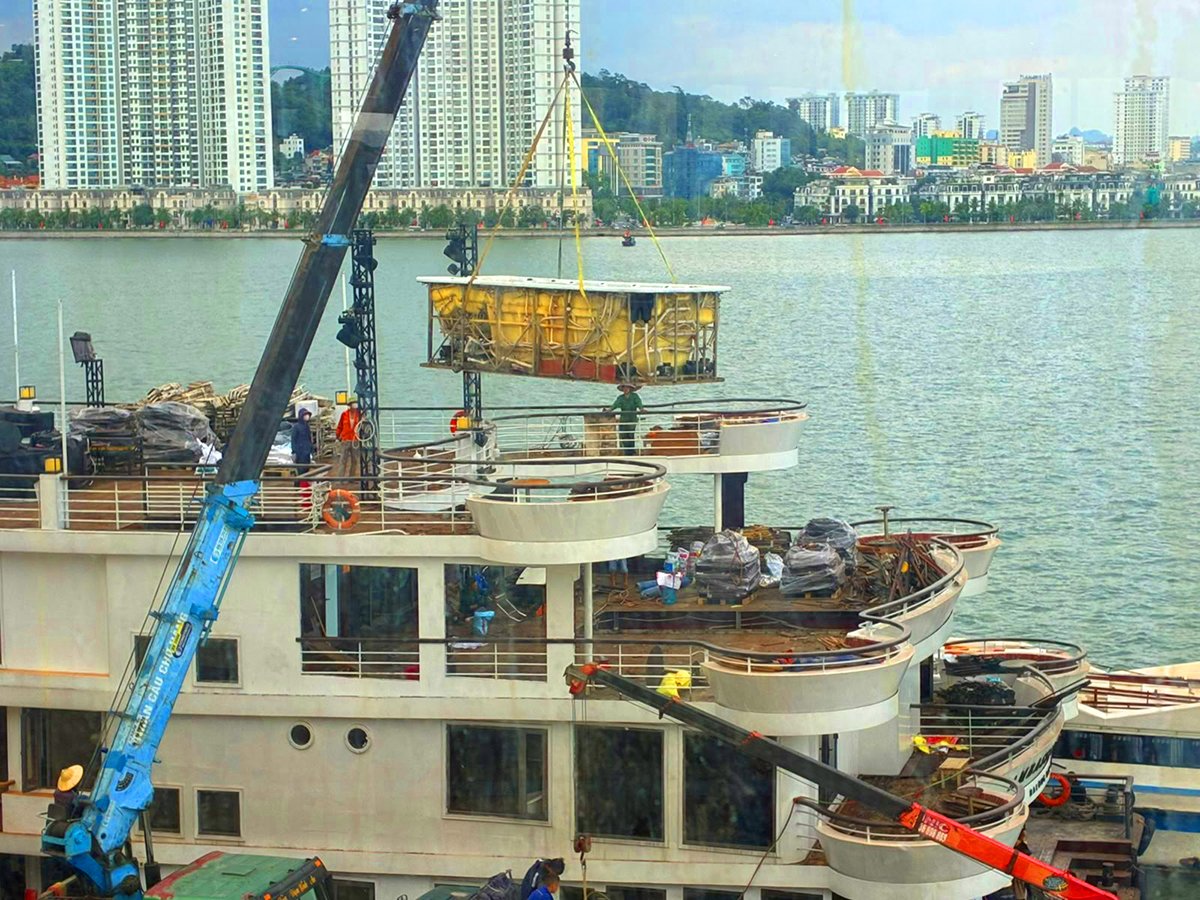
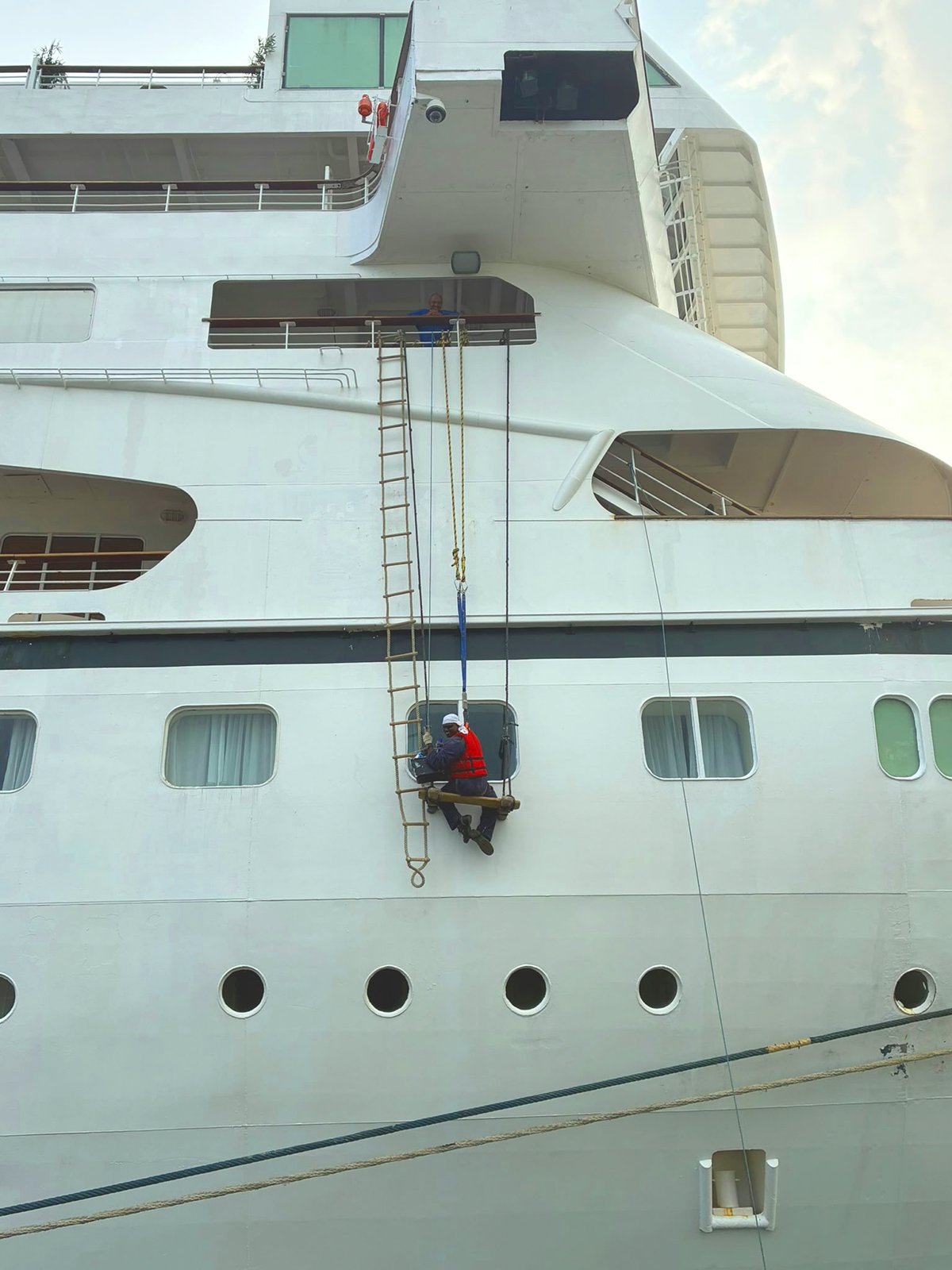
| As we wait in Halong Bay a few more days for bunkering, an Ambassador Cruise ship moors next to us, undergoing a total gut renovation. |
 |
| Painting the Odyssey never ends |
|
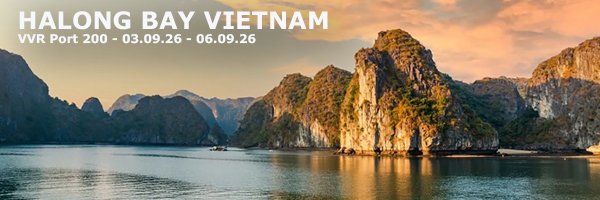
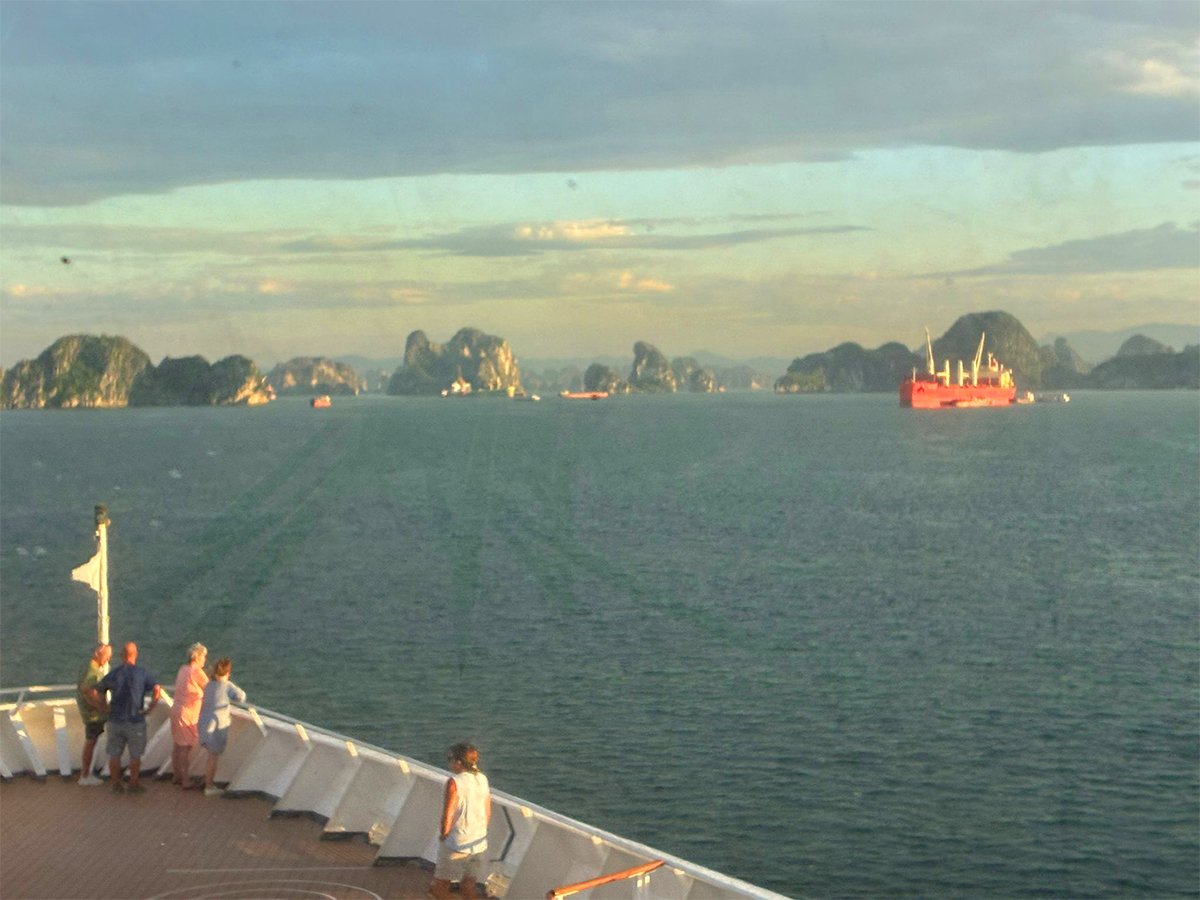
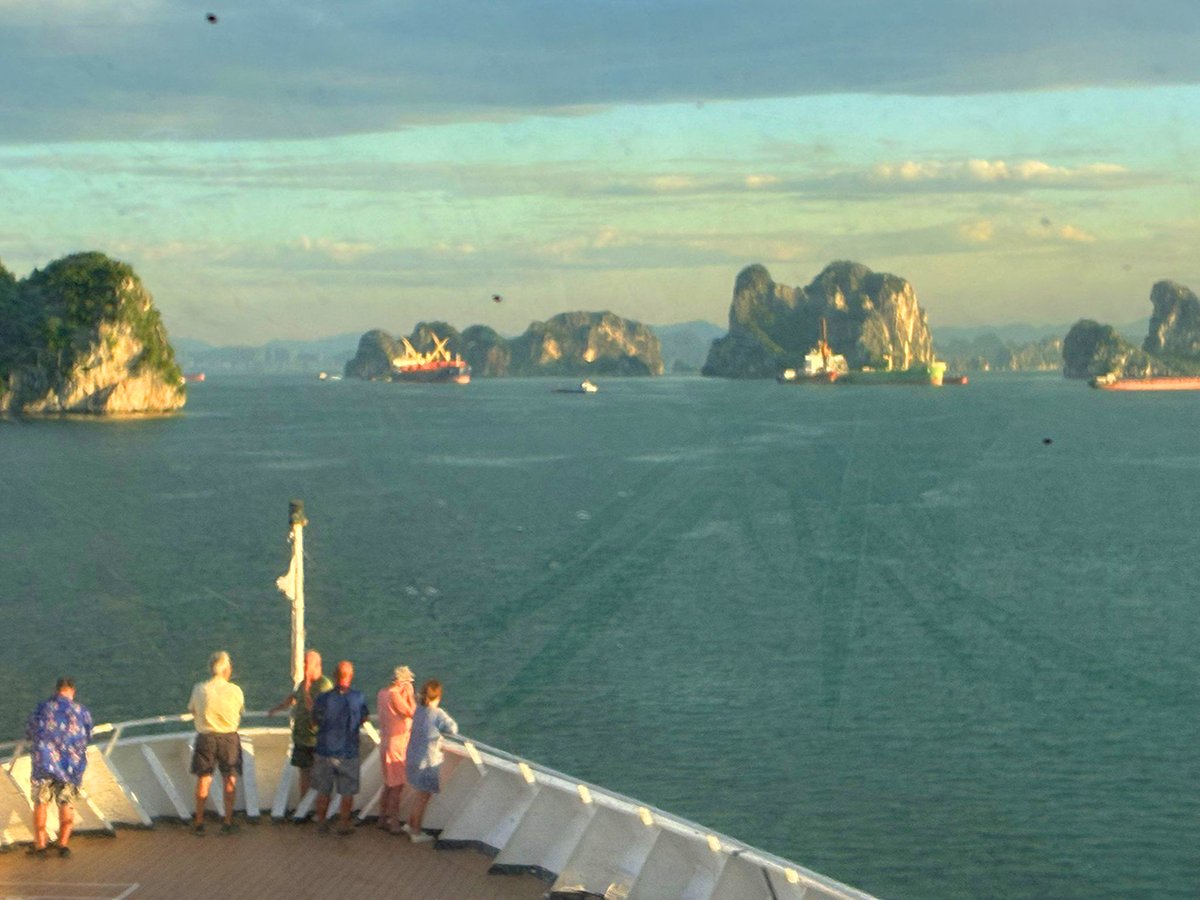
September 3-12, 2026 Marti Eicholz The Mercy of Return Revisiting Hạ Long Bay after Storm and Sea After two days in Hong Kong; two bright, compressed days of harbor light, elevators climbing the ribs of glass towers, ferries stitching one shore to another, and the city rising all around us like an illuminated question, we surrendered again to the sea. Hong Kong had been all velocity and vertical shine, a place of tram bells, neon weather, polished stone, and crowds moving with the confidence of tides. Then, suddenly, the ship pulled away, and the city loosened behind us, its skyline becoming first a glittering wall, then a necklace, then a memory disappearing into haze. Three days at sea followed, and the ocean did what the ocean does best: it erased edges. It softened the itinerary into motion. Morning arrived as a pale seam on the horizon; afternoons widened into blue silence; evenings gathered themselves in long violet folds. We walked the decks with nowhere urgent to be, listening to the ship breathe and groan, watching the wake unspool behind us like a white ribbon tied to everything we had already left. At sea, time became less a sequence than a sensation, salt on the railings, wind in the corridors, the slow ceremony of distance. And then, once more, Vietnam appeared as a dim green breathing at the edge of the world. We arrived and docked in Hạ Long for another visit, and the name itself seemed to rise from the water before the land did: Hạ Long, the descending dragon. Only a week or so earlier, we met this place under a different sky, in the wet, ghostly aftermath of fleeing weather; mist and rain, typhoon warnings behind us, the bay half-veiled, the famous limestone towers withdrawing into cloud as if reluctant to be seen. That first encounter felt stolen from the storm, beautiful but unfinished, like a page turned too quickly. Now we had been given the mercy of return. To revisit is not merely to go back; it is to arrive with the first visit still alive. It is to stand in the same place and discover that both you and the place have shifted. The bay we missed the first time around was not only a checklist of caves, islands, views, and guidebook names. We missed the bay’s patience. Its depth. Its ancient, dreaming scale, revealing itself like scripture written in stone and water. I leaned into the railing and felt the air change, warmer, greener, damp with mineral and leaf, threaded with the faint metallic smell of boat engines and the clean brine of the Gulf. The wind carried little fragments of the place; the slap of water against hulls, the far cry of a gull, the soft percussion of ropes against masts, the low human murmur of shipmates preparing to go ashore. The limestone islands lifted from the emerald water in shapes too improbable for ordinary geography. They seemed less formed than summoned: towers, shoulders, sleeping animals, ruined temples, the broken backs of dragons. Hạ Long Bay belongs to that rare category of places where geology and myth do not compete but complete one another. Science tells us of limestone shaped across vast reaches of time, of tropical rains and tides carving caves, arches, hollows, secret chambers, and sheer karst walls. Legend tells us of dragons descending from heaven, scattering jewels into the sea to defend the land, each jewel hardening into an island. Standing before those green stone formations, both explanations felt true. One belonged to time; the other to wonder. The closer we came, the more the bay became texture. The cliffs were not simply green; they were moss-dark, fern-fringed, shaggy with rain-fed growth, their faces-streaked charcoal and silver where water had been dragging its fingers for centuries. The sea was not simply calm; it was glass with breath beneath it, lifting and lowering us with a patience almost maternal. Light gathered in strange places; on the wet lip of a cave, on the lacquered side of a boat, on the rippled path left by an oar. Even through the humidity seemed visible, a gauze suspended between island and island. The bay’s beauty is not delicate. It is immense and old and strangely intimate. These islands have endured upheaval, submersion, erosion, heat, rain, and the endless patience of water. They rise now not as smooth monuments but as weathered beings, clothed in stubborn green, their cliffs stained with age, their caves opening like mouths that have watched human history drift past in wooden boats, warships, fishing skiffs, and cruise ships. To move among them is to feel very small but not diminished. Rather, one feels invited into an older rhythm, into a world where stone keeps memory longer than any visitor can. What had I missed the first time? I had missed the way the water changes color beneath a calmer sky; from pewter to jade to a green so deep it seems to hold forest and cloud together. I had missed the smallness of boats against the cliffs, their wakes touching the feet of islands that have known prehistoric settlements, floating communities, dynasties, invaders, empires, and storms. I had missed the silence between engines, that brief hush when the bay seems to fold itself around you and every limestone wall becomes a listening presence. I tried to make myself porous to it. I wanted to remember not only what I saw, but what the seeing did to me: the way my shoulders lowered without permission, the way my breathing slowed to match the idle churn of the boat, the way awe sometimes arrived not as astonishment but as quietness. There were moments when no one near me spoke, and the silence did not feel empty. It felt inhabited; by water, by stone, by all the unnamed lives that had crossed this bay before mine brushed briefly against it. Beneath the loveliness, there is also strategy and survival. The waterways around this region are not merely scenic passages; they have been corridors of power. Near these tides, the story of Trần Hưng Đạo and the Battle of Bạch Đằng still reverberates through Vietnamese memory: wooden stakes hidden beneath tidal waters, enemy vessels drawn into the trap, a nation defending itself through knowledge of its own river. The same landscape that enchants us visiting once protected the homeland. Beauty here is not passive. It has teeth. It has history under the surface. That is what makes Hạ Long so haunting: the layers. One can look at an island and see only a postcard, or one can let the place deepen. There is geology in it, yes, the long labor of limestone and monsoon. There is myth, the Mother Dragon and her children, descending in defense and choosing to remain. There is archaeology, the trace of ancient coastal lives who knew these waters long before there were travelers with cameras and schedules. There is ecology too, green life clinging to stone, hidden habitats, caves cool as breath, and lagoons held like secrets inside the rock. On this return, I wanted to see not more, exactly, but better. I wanted to look without rushing to name. The islands already had names, Fighting Cock, Stone Dog, Incense Burner, human attempts to translate stone into familiarity. But their truest names seemed older than language. Some leaned toward one another as if in conversation. Some stood alone, severe and green-backed. Some dissolved into mist at their summits, making the sky seem not above them but within them. There was tenderness in being allowed a second look. Travel often teaches us appetite: see this, photograph that, move on, compare, remember. But revisiting teaches humility. It admits that the first glance is never enough. It allows a place to correct us. The Hạ Long I returned to was not the same Hạ Long we had fled toward under typhoon skies, and I was not quite the same either. The storm had made the bay dramatic; the return made it generous. Perhaps what moved me most was the doubleness of the place: how public and photographed it is, and yet how private it felt when I let myself stop performing the role of traveler. I did not need to collect it. I did not need to master its names or facts, though they mattered. I only needed to stand there long enough to be altered by the color of the water, by the smell of wet stone, by the sight of green cliffs floating in their own reflections. For a little while, the bay gave me a rarer souvenir than proof: it gave me attention. I thought of the dragons, not as creatures of spectacle, but as guardians of threshold places: sky and sea, past and present, departure and return. Perhaps every journey has such a dragon in it, some force that descends unexpectedly and reshapes the water. A storm can be a dragon. Memory can be a dragon. So can longing. So can the quiet desire to understand why a place follows you after you leave it. By the time we left again, Hạ Long had become less a destination than a kind of interior landscape. Hong Kong glittered behind us; the open sea had carried us forward; Vietnam had risen twice from weather and water. The first visit gave me mystery. The second gave me meaning. As the ship moved away, the bay darkened to jade and pewter behind us, the last cliffs dissolved into mist while the wake loosened like a white thread across the water. And somewhere among those limestone towers; those ancient, rain-carved, dragon-scattered stones, I felt the rare grace of returning not to repeat an experience, but to complete one. |
|
Copyright © 2026 All rights reserved |