|
|
 |
 |
 |
 |
 |
 |
 |
 |
|
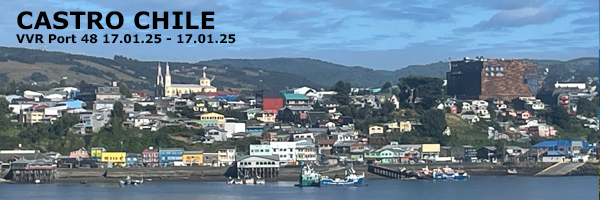
January 17, 2025 Marti Eicholz As I reflect upon the journey that has unfolded so far, I realize that every place I visit leaves a unique and lasting mark on my life. Each destination, whether it astonishes me with its natural beauty, captivates my curiosity, or seems plain at first glance, contributes a vital thread to the tapestry of my travels. These experiences — grand adventures and quiet moments alike — intertwine to create a narrative rich with discovery and personal growth. With every new stop, I gain insights and lessons that are entirely unique to that place, deepening both my understanding of the world around me and my sense of self. The journey is not only about reaching new horizons, but also about continuously gathering these fragments of wisdom and perspective, each contributing to a fuller, more meaningful story. Moving forward, I carry these memories and revelations with me, eager to see what awaits at the next destination. Castro, nestled on Chiloé Island in the heart of Chile’s Lake District, is a vibrant and charming city of approximately 40,000 residents. It greets visitors with a unique blend of natural beauty and cultural heritage. The city is surrounded by rolling, verdant hills and dotted with trees that lend the landscape a distinct, almost Tuscan character. Arriving by ship, one is met with scenic vistas and an inviting atmosphere that hints at the town’s rich history and traditions. While Chiloé Island is often draped in misty, dramatic clouds, on this particular day, it was bathed in clear blue skies, offering a rare display of sunshine. The island is celebrated for its remarkable wooden churches, each brightly painted and brimming with character, which stand as a testament to the region’s architectural heritage. Fishing boats dot the harbors, their crews hauling in the daily catch that supplies Chiloé’s renowned seafood cuisine. Iconic palafitos — colorful houses perched on stilts along the waterfront — add a whimsical touch, while local folklore and mythology infuse the landscape with an air of mystery. The countryside itself beckons with natural wonders waiting to be explored. Established in the 16th century, Castro stands as Chile’s third-oldest city and the largest on Chiloé Island. Despite its status as the island’s capital and commercial center, it retains a cozy, small-town charm that makes it both cosmopolitan and endearing to visitors. The city’s rich past and vibrant present are evident in its lively streets and welcoming community. Castro’s scenic setting perfectly reflects its deep maritime roots. The town is a gateway to authentic Chilote culture, where traditional markets overflow with handmade crafts, freshly caught seafood, and unique indigenous products. These markets offer a glimpse into the daily life and customs of the local people, making them a must-see for anyone seeking a genuine experience. One of Castro’s greatest charms is its walkability. Here, you don’t need a map or a specific destination; simply wandering the streets allows you to soak in the town’s vibrant spirit. The wooden houses, each with its own distinctive shape, design, and burst of color, line the streets and stand as living pieces of art. Some are triangular, while others are painted in bold, eye-catching hues. A leisurely stroll along the Castro waterfront reveals rows of palafitos, their stilts anchored beside the sparkling blue shore. The morning sun warms the scene, and the sight of birds dancing among the palafitos brings a sense of joy and tranquility. Castro is perhaps best known for its picturesque palafitos — brightly colored, shingle-roofed wooden houses built on stilts over the water. These structures, unique to Chiloé, were originally designed to provide fishers with direct access to the sea while offering protection from the changing tides. Today, they serve as both residences and a symbol of the city’s resilience and ingenuity. Nowhere else on the island will you find as many palafitos as in Castro. Their construction began in the nineteenth century, coinciding with a period of significant commercial growth fueled by the fishing industry. The design allowed residents to live right at the water’s edge, mooring their boats within arm’s reach and integrating daily life seamlessly with the rhythms of the sea. Today, the palafitos stand as iconic reminders of Castro’s maritime legacy and enduring community spirit. In the charming town of Castro, the iconic houses perched on stilts are a vibrant spectacle, painted in a kaleidoscope of colors that immediately catch the eye. These unique dwellings are constructed from locally sourced woods such as luma and cypress, and feature distinctive larch wood tiles, reminiscent of the towering redwoods found along the California coastline. Each house is thoughtfully designed with two distinct facades: one facing the tranquil canal, adorned with a picturesque terrace perfect for enjoying the water views, and the other oriented toward the street, seamlessly connected by an inviting bridge. Once, stilt houses dotted the entire landscape of Chiloé Island, illustrating the area’s architectural ingenuity and adaptation to its environment. However, the forces of nature — earthquakes and tidal waves — have sadly claimed many of these traditional structures, leaving only a precious few to tell the story of the island’s past. Mercadito café is a delightful spot that embodies Castro’s playful spirit, with its brightly colored orange tables and an eclectic mix of chairs in shades of mint green, tomato red, and zesty citrus yellow. The café boasts a scenic view of the waterfront, providing both locals and visitors with a cozy place to relax and soak in the lively atmosphere. At the heart of Castro’s bustling commercial district lies the Plaza de Armas, the city’s main square and a focal point for activity. The plaza is designed with wide walkways ideal for leisurely strolls and features abundant seating for those seeking a moment of repose. It often resonates with the melodies of street musicians, but even in quieter moments, it serves as an excellent spot for observing daily life and finding a peaceful respite amidst the city’s energy. Dominating one corner of the plaza is Castro’s most celebrated landmark: the Church of San Francisco (Iglesia San Francisco de Castro), designated as a Patrimony of Humanity. This neo-Gothic masterpiece was designed by the Italian architect Eduardo Provasoli and meticulously brought to life by local carpenters in the early twentieth century. Provasoli’s vision elegantly blends neo-Gothic and classical architectural elements, resulting in a structure that is both elaborate and harmonious. The church’s exterior, crafted from galvanized iron, stands out with its striking color palette — rich butterscotch accented by violet and mauve trims. Stepping inside, visitors are greeted by a serene interior of warmly varnished wood, which becomes particularly enchanting when sunlight streams through the stained-glass windows, illuminating the space with a gentle, multicolored glow. Within its sacred halls, San Francisco Church preserves one of Chile’s most significant collections of colonial-era art, including remarkable paintings and frescoes commissioned by the viceroy. The church is not only a spiritual center but also a treasure trove of artistic heritage. As one of the sixteen wooden churches that comprise the UNESCO World Heritage-listed Churches of Chiloé, the Church of San Francisco stands as a testament to the region’s rich architectural and cultural legacy. This remarkable structure is undoubtedly the crown jewel of Castro’s Plaza de Armas, symbolizing the enduring craftsmanship and creativity of Chiloé’s builders. Castro’s residents are renowned for their imaginative approach to color, embracing vibrant hues in every aspect of the town’s aesthetic. The wooden stilt houses, painted in bold shades of orange, green, blue, and red, create a dazzling display, while boats in the harbor flaunt combinations of vivid paint, adding to the town’s picturesque charm. The iconic church itself shines in bright yellow, accented with purple, red, and white, standing as a beacon of creativity and joyful expression. Echoing the sentiment of French artist Paul Gauguin, “Color! What a deep mysterious language, the language of dreams.” Castro vividly speaks this language, inviting all who visit to experience its enchanting and colorful world. Castro is seductive. This evening at sunset, The Odyssey will leave Castro for a day at sea sailing towards the Chilean Fjords. |
|
Copyright © 2025 All rights reserved |