|
|
|
2 days medical issue : food poisoning |
 |
 |
 |
 |
 |
 |
 |
 |
 |
 |
 |
 |
 |
 |
 |
 |
|
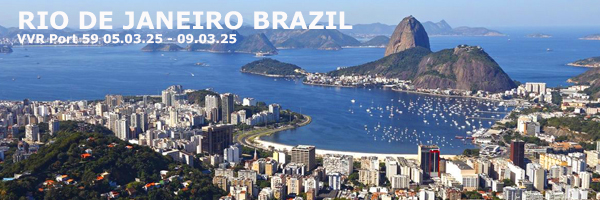
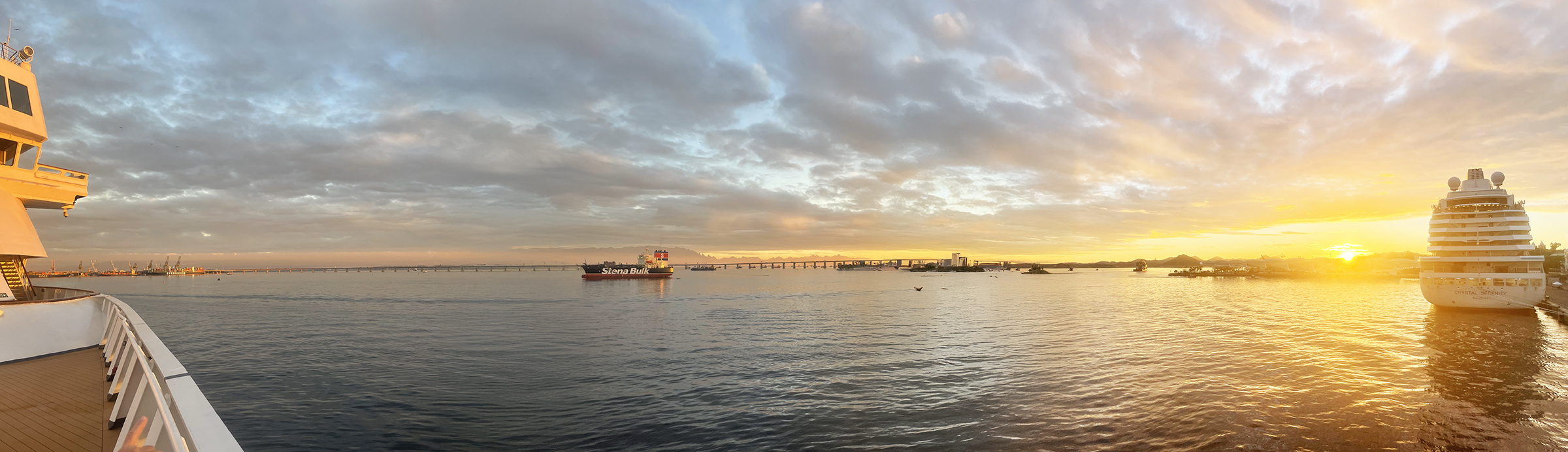
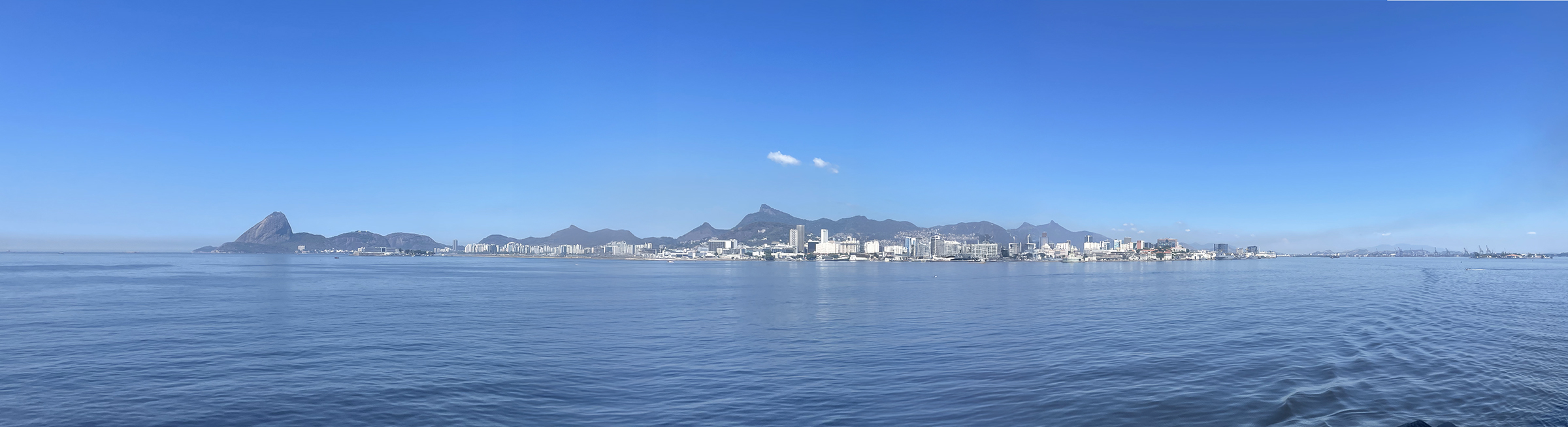
March 3–9, 2025 Marti Eicholz Our journey to Rio de Janeiro begins with a sense of tranquility as the Odyssey glides smoothly across the open sea. The atmosphere is relaxed, and passengers are enjoying the gentle rhythm of the ocean when suddenly, an unexpected medical emergency arises among the crew. It quickly becomes clear that the ship’s infirmary lacks the resources needed to address the situation. Acting swiftly and decisively, the captain orders an increase in speed, pushing the Odyssey to arrive in Rio ahead of schedule so the crew member can be transferred safely to receive critical medical care. After the urgent transfer, the ship remains anchored offshore for several hours, waiting until a berth becomes available at the busy port. The anticipation builds as passengers gaze at the city from the water, eager for their first encounter with this legendary destination. Eventually, the Odyssey docks in the revitalized Plaza Maua, now a vibrant hub and Rio’s main cruise terminal. The area buzzes with fresh energy, having been transformed into a showcase of contemporary urban regeneration. Plaza Maua is home to the futuristic Museu do Amanhã, or Museum of Tomorrow, an applied sciences museum dedicated to exploring the immense challenges and possibilities facing humanity in the coming decades. Nearby, the colossal Etnias mural by the celebrated artist Kobra covers entire stretches of the old port warehouses. This stunning piece, recognized as the largest graffiti artwork ever created, depicts the faces of indigenous peoples from across the globe, capturing the diversity and resilience of the human spirit. Stepping ashore, the first sensations in Rio are almost overwhelming — a wave of dense humidity wraps around you, the noise of relentless traffic fills the air, and the unmistakable scent of the city, including the sour tang of sewage, is ever-present. The cityscape reveals itself in layers: favelas cling to hillsides right next to affluent neighborhoods, presenting a striking visual of Rio’s complex social fabric. This juxtaposition is a stark reminder that beneath the city’s famed beauty lies a reality both intricate and challenging. Yet, as you adjust to the initial shock, Rio’s astonishing beauty gradually comes into focus. The city stretches along miles of golden beaches, with dramatic mountains rising directly from the ocean’s edge, creating a breathtaking backdrop. The soundscape is alive with the rhythms of Bossa Nova and Samba, and amid the chaos, you witness small but powerful scenes of joy and human connection. Love and celebration thrive even in the midst of madness, revealing the city’s true spirit. Rio is justifiably called the “marvelous city.” Its world-renowned Carnival stands as a testament to its grandeur and exuberance — a dream experience for countless travelers and my fellow shipmates alike. Carnival is an extravagant, week-long festival filled with parades, lavish parties, and infectious street dancing. It begins on the Friday before Ash Wednesday and culminates at noon on Ash Wednesday, enveloping the entire city in festivity. During Carnival, Rio bursts to life with an explosion of color and sound. The streets are overwhelmed by feathers, sequins, and swirling costumes as music and dance take center stage. This spectacular event is deeply woven into Brazilian culture, uniting residents of all backgrounds. At its heart are the “Escolas de Samba,” or samba schools, many of which originate in the favelas. These communities pour their hearts into creating the magical performances that dazzle the world. Street parties called “blocos” spring up in every neighborhood, inviting everyone — local or visitor — to join in the joyous dance. The iconic Sambadrome, designed by legendary architect Oscar Niemeyer, hosts the official samba parades, with tiered viewing platforms filled with cheering fans as samba schools make their way down the parade runway. This is the largest open-air show on earth, and the energy is electric. To hear the thunder of drums and witness the unyielding passion of Cariocas — natives of Rio — is to feel the pulse of the city in its purest form. My shipmates and I unanimously agree: Carnival in Brazil is truly “The Greatest Show on Earth.” It’s an unforgettable celebration of artistry, resilience, and community, and it leaves a profound impression on all who experience it. Beyond the parades, the soul of Rio’s music can be traced back to places like Pedra do Sal, known as Little Africa. This historic area became a haven for escaped and freed slaves, and within its lively streets, the infectious rhythms of Samba were first born — a legacy that continues to shape Rio’s identity today. In January 1502, a fleet of Portuguese explorers arrived at the breathtaking expanse of Guanabara Bay. Mistaking its vastness and the way the water stretched inland, they assumed it was the mouth of a mighty river and named it Rio de Janeiro,“January River.” Yet, this was no river, but a grand bay, teeming with ecological wonders. More than a hundred islands shimmer across their surface like scattered gems, each one with its own story and character. Some are tiny, untouched islets that provide safe havens for nesting birds and sea turtles, while others are larger and inhabited, housing communities that reflect the vibrant cultural and ecological mosaic of the region. The interplay between wild nature and human settlement here is a testament to the area’s enduring allure and diversity. Venture into the heart of Floresta da Tijuca, acclaimed as the largest urban forest in the world. This lush rainforest, once ravaged and stripped bare by coffee plantations in the 19th century, was painstakingly replanted to safeguard Rio’s precious water supply. Spanning over twenty miles, Tijuca Forest is a living monument to environmental restoration and resilience. Its vast stretches are alive with hundreds of unique species of plants and animals, providing a sanctuary for biodiversity within the city limits. Winding hiking trails lead adventurers past cascading waterfalls, mysterious caves, and panoramic overlooks that offer spectacular views of both the Atlantic Ocean and the sprawling city below. Each step immerses visitors deeper into a living tapestry of natural beauty and history. Towering above this vibrant landscape is the iconic Christ the Redeemer statue, a marvel of engineering and artistry, celebrated as one of the 7 New Wonders of the World. Perched atop Corcovado Hill at a staggering elevation of 2,326 feet, the 98-foot-tall statue gazes out over Rio de Janeiro, arms outstretched in a gesture of protection and welcome. Encircled by dense jungle and cloud-kissed peaks, Christ the Redeemer is more than a monument — it is a spiritual emblem that draws visitors from around the globe, inspiring awe with its scale and serenity. The journey to its summit is as exhilarating as the destination, and standing beneath its gaze, one feels the city’s pulse and the sense of magic that has enchanted countless travelers. Just a short distance away lies the Jardim Botanico, or Botanical Gardens, founded in the 1800s. This sanctuary of tranquility is home to over six thousand distinct species of native plants, making it both a public park and an important scientific research hub. Recognized as a UNESCO biosphere reserve, the gardens offer peaceful pathways beneath towering royal palms, tranquil lily ponds, and meticulously curated collections of tropical flora. Visitors can stroll through shaded avenues, observe rare orchids, and learn about Brazil’s incredible plant diversity in a setting that promotes both conservation and education. The legendary beaches of Copacabana and Ipanema embody the spirit and rhythm of Rio. Renowned for their lively atmosphere and cultural vibrancy, these stretches of sand host a multitude of events — from music performances and art shows to spontaneous samba sessions. Stroll along Oscar Niemeyer’s iconic black-and-white mosaic promenade, where the vivacious energy of the city is palpable and samba music drifts on the sea breeze. The turquoise waters invite swimmers for a refreshing escape, while bustling beachfront markets tempt visitors with colorful swimwear, handcrafted jewelry, stylish sunglasses, and unique souvenirs. Haggling with vendors is part of the fun, and the beachfront is dotted with lively quiosques, or beach bars, offering cold beers, fresh coconut water straight from the shell, and Brazil’s famed Caipirinha cocktail, made with local cachaca. Alongside these treats, a variety of savary and sweet snacks await, adding to the festive ambiance. These beaches are a crossroads for people from all walks of life, each bringing their own stories and energy to the scene. The shoreline often features intricate sand sculptures crafted by talented local artists, drawing crowds and sparking admiration. As daylight fades, the beaches become a magical stage for watching the sun set behind the city, painting the sky in hues of gold and crimson — a moment cherished by both locals and visitors alike. The famous bossa nova song, “The Girl from Ipanema,” finds its roots in this very neighborhood. It was here, amid the relaxed charm and beauty of Ipanema, that the composer and lyricist saw the young woman who inspired this timeless melody, now an anthem known around the world. The music and atmosphere of Ipanema evoke a sense of nostalgia and romance, forever linking the beach with Brazil’s rich artistic heritage. For panoramic vistas that capture the essence of Rio, a trip up the gondola to Pao de Acucar (Sugar Loaf Mountain) is simply unforgettable. The ascent itself is an adventure, offering sweeping 360-degree views of the city, the sparkling bay, and lush surroundings. Sunset is the most magical time to visit; as the sun slips behind Christ the Redeemer, the sky ignites in brilliant colors, providing a breathtaking spectacle that lingers in memory long after the descent. The Centro district and its neighboring areas form the historic heart of Rio de Janeiro. This area is a mosaic of colonial architecture, vibrant streets, and cultural landmarks, each contributing to the city’s rich historical narrative. Walking these avenues transports visitors through centuries of transformation, blending the old and new in fascinating ways. Among the city’s architectural gems is Igreja de Nossa Senhora da Gloria do Outeiro, a church cherished by the Portuguese royal family. Its interior is renowned for exquisite blue and white azulejos — ceramic tiles that depict intricate scenes and designs, reflecting both artistic mastery and religious devotion. The church stands as a testament to Rio’s enduring ties to its colonial past and Portuguese heritage, inviting visitors to marvel at its beauty and significance. In Rio de Janeiro, the vibrant heart of Brazil, history and culture come alive at every turn. Praca Floriano stands as a testament to the city’s colonial past, graced by two architectural masterpieces: Theatro Municipal, whose ornate facade takes inspiration from the Paris Opera Theatre and hosts world-class classical music and ballet performances, and the Biblioteca Nacional do Brasil (National Library of Brazil), known for its stunning staircase, elegant reading room, and the distinction of being the largest library in Latin America. Not far away, Praca Quinze de Novembro (15th of November Square) invites visitors to step into the pages of history, surrounded by monumental buildings that have shaped Brazilian heritage. The Convento de Santo Antonio (St. Anthony’s Convent), though weathered by time, hides a treasure within: step inside to discover a breathtaking interior adorned with lavish gold gilding, a striking example of the opulence found in historic Brazilian churches. Dominating the city’s central region is the world’s largest and most imposing four-sided analog clock, a monument that even surpasses London’s Big Ben in scale and grandeur. High above, the sky unfurls in hues so vivid and blue that Rio has been deemed to have the most beautiful skies on earth — a title earned after rigorous studies comparing sky color, clarity, luminosity, and cloud patterns with nineteen other locations across six continents over seventy-two days. Rio de Janeiro is not just a city; it is a celebration of life where the human spirit harmonizes with the splendor of nature. The city welcomes you with its dynamic culture, lush landscapes, renowned cuisine, and warm hospitality that leave a lasting impression on every visitor. As Sunday morning dawns, the tranquil sea glistens under the golden sun. The Odyssey, poised and ready, sets sail along Brazil’s picturesque coastline, carrying with it memories of Rio’s magic and the promise of new adventures at the next port of call. Whether you are drawn by history, architecture, or the allure of natural beauty, Rio de Janeiro stands ready to enchant you time and again. Copyright © 2025 All rights reserved back to indexx-voyage.htm l next page
|