|
|
 |
 |
 |
 |
 |
 |
|
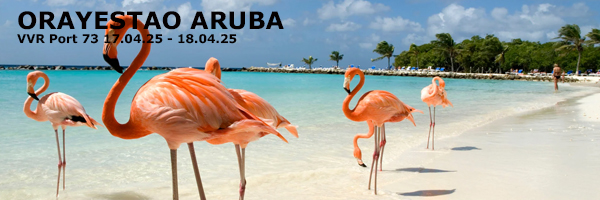
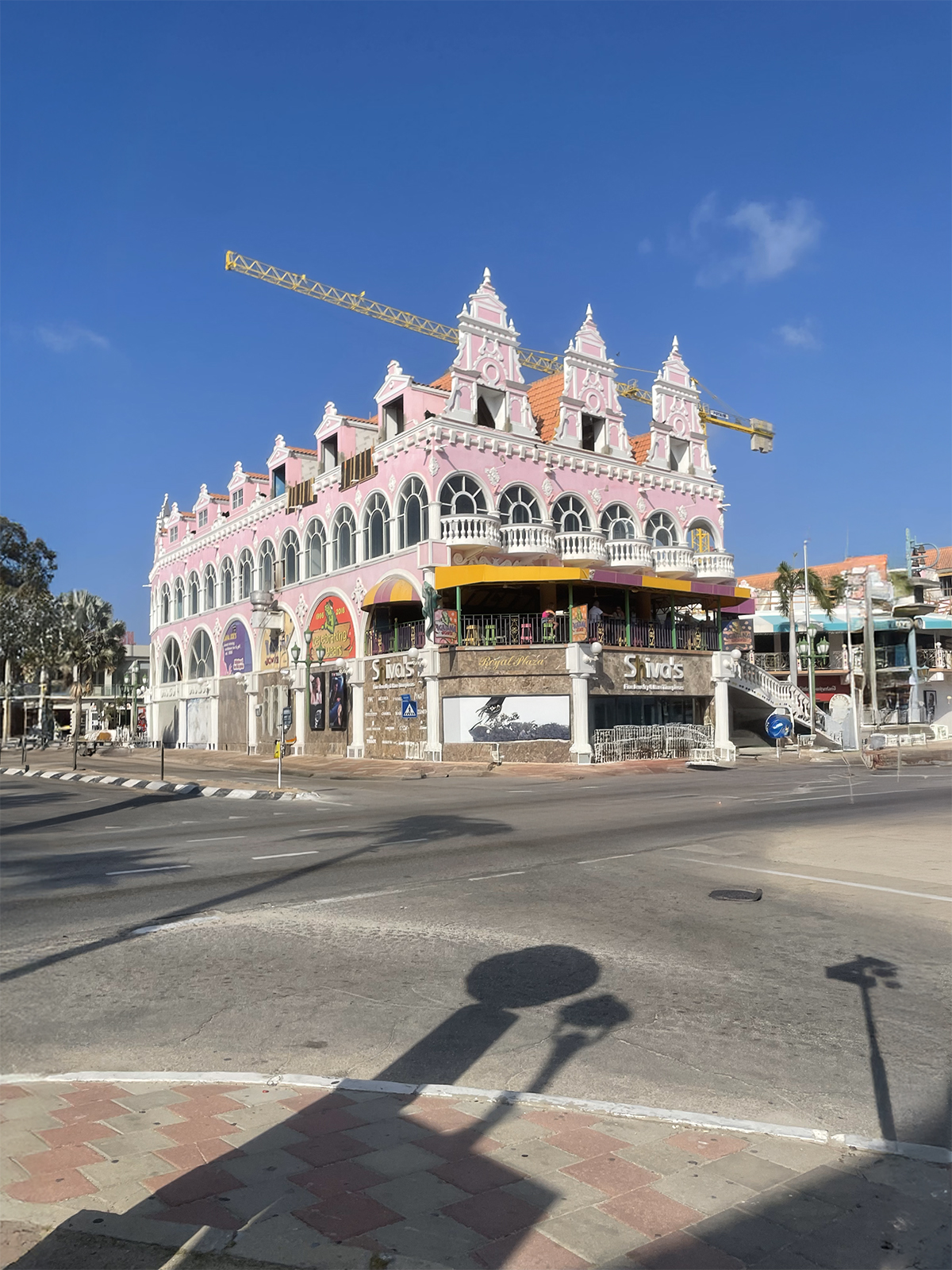
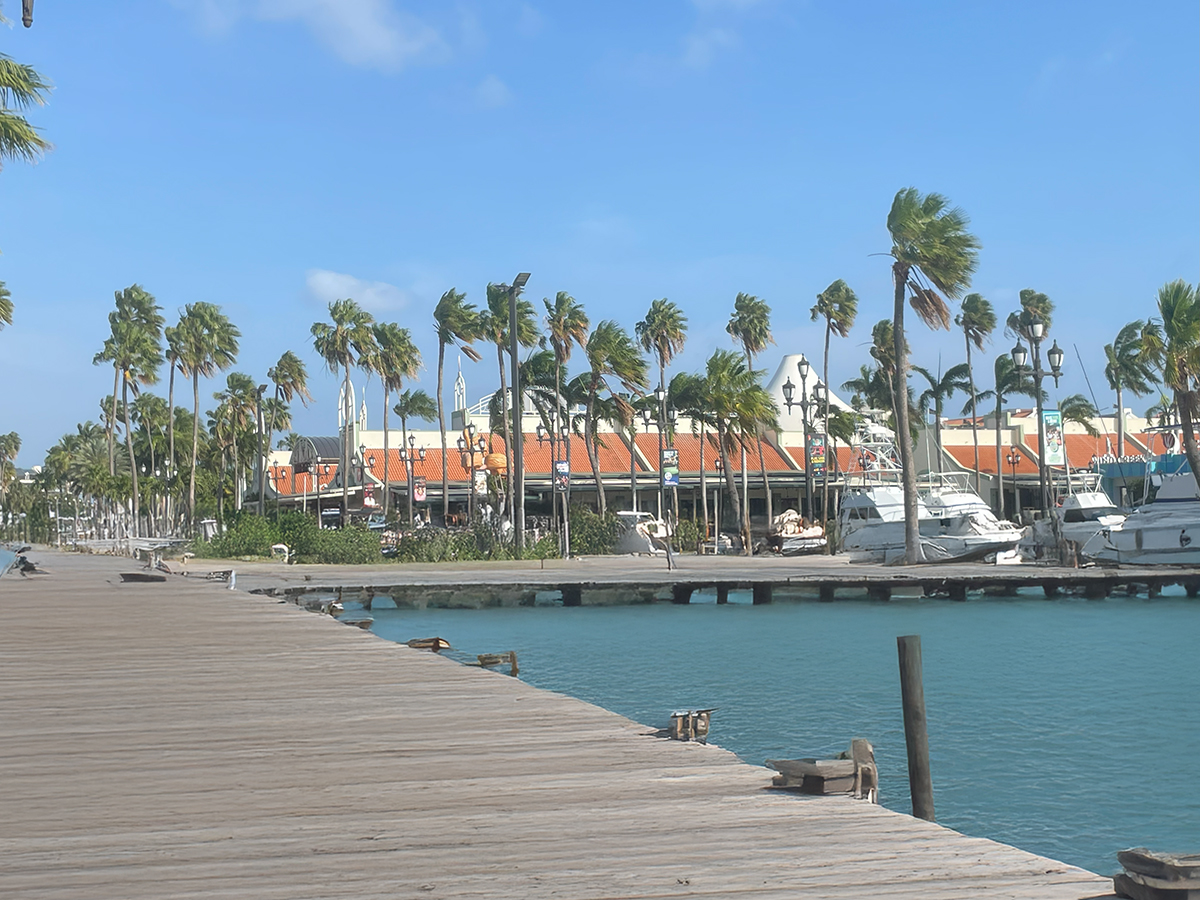
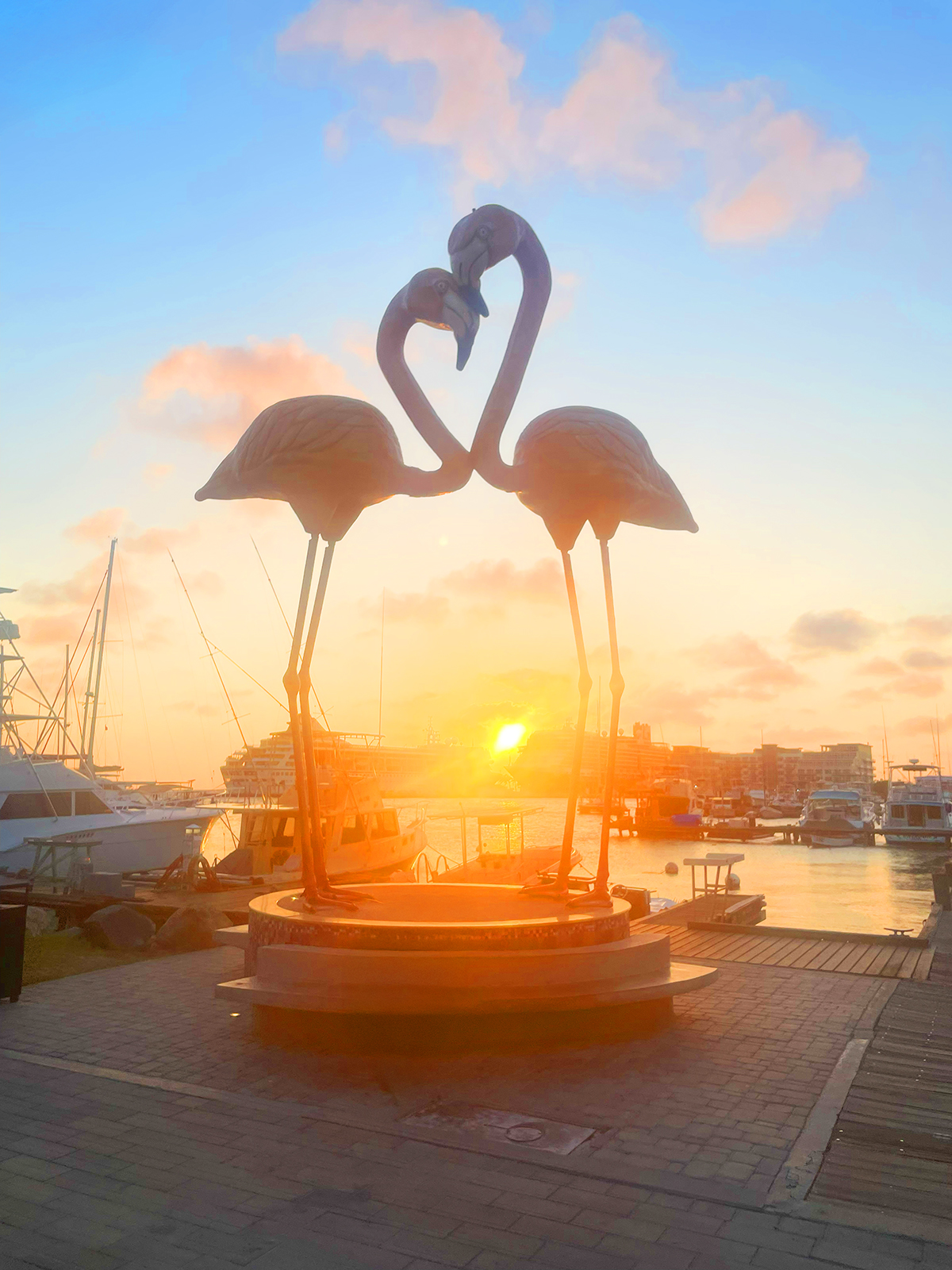
April 17–18,2025 Marti Eicholz After a relaxing overnight voyage, the first light of dawn revealed the harbor as tugboats approached The Odyssey. With their powerful jet nozzles, the tugboats performed a dramatic water salute, creating impressive arcs that sparkled in the sun and marked a ceremonial welcome to Oranjestad, the capital of sunny Aruba. This striking tradition underscored the anticipation and excitement as we arrived at this enchanting Caribbean destination. Aruba is famous for its consistently sunny and dry climate, with the island receiving an average of just 15 inches of rainfall annually. This ensures that visitors can almost always count on clear skies and brilliant sunshine. The ever-present trade winds sweep across the island, providing a refreshing breeze that is especially beloved by windsurfers. Situated just below the hurricane belt, Aruba enjoys a low risk of tropical storms, further enhancing its appeal as a year-round vacation spot. The landscape is defined by its arid, cactus-dotted terrain, giving Aruba a unique beauty and a remarkably stable climate. Geographically, Aruba is part of the ABC islands — Aruba, Bonaire, and Curacao — located in the southern Caribbean Sea. The island sits about eighteen miles north of Venezuela, and on a clear day, breathtaking views of the Venezuelan coastline can be seen from Aruba’s highest points, just nine miles away at its closest. The island itself is relatively small and flat, stretching roughly twenty miles in length and five miles at its widest point, with few hills and no rivers gracing its terrain. Human presence on Aruba dates back as far as 2500 BC, making it a place rich in history and culture. The island’s earliest inhabitants were the Caquetio Indians, a subgroup of the Arawak people. These semi-nomadic Indigenous communities survived by fishing, hunting, and gathering, living in small family groups. They crafted tools from shells and roughly flaked stones, leaving behind a legacy of cave drawings and petroglyphs that can still be admired today in the Arikok National Park and among the rock formations at Ayo. More than three hundred prehistoric pictographs remain etched into the island’s stones, offering a glimpse into Aruba’s distant past. European exploration began in 1499, when the Spanish explorer Alonso de Ojeda and his fellow adventurers landed on the island. They dubbed Aruba the “island of giants,” awestruck by the height of its Caquetio inhabitants, who stood noticeably taller than the Europeans themselves. The Spanish maintained control over Aruba for 137 years, until the Dutch seized the island in 1636. The Dutch valued Aruba for its strategic location, using it to protect vital salt shipments and to establish a naval base during their prolonged conflict with Spain. Throughout its history, Aruba has experienced several economic booms that have shaped its development. The gold rush of the nineteenth century, the establishment of the Lago Oil Refinery during World War II, and the cultivation of Aloe vera — a plant that has become a symbol of the island’s agricultural heritage — are all significant milestones. Aruba Aloe, founded in 1890, is recognized as the oldest aloe company in the world, a testament to the island’s enduring legacy in this industry. Today, Aruba is home to approximately 112,000 people who collectively speak four languages: English, Dutch, Spanish, and Papiamento — a vibrant local creole that blends Portuguese, African, Dutch, and Spanish influences. The island is truly a cultural melting pot, with over ninety nationalities and ethnic groups represented, including European, East Indian, Filipino, and Chinese communities. Aruba’s rich tapestry of cultures is celebrated through diverse traditions and customs, making diversity and inclusion a defining feature of island life. In fact, Aruba is considered one of the most ethnically diverse places in the world, where unity and multicultural harmony are woven into the fabric of daily existence. Aruba is a true Caribbean gem, offering an enchanting blend of sun-kissed rocky bays, mesmerizing natural pools sculpted by the relentless rhythm of the sea, and vast expanses of jade and turquoise waters that seem to stretch endlessly into the horizon. The island’s over forty miles of stunning coastline, paired with the ever-present trade winds that dance along the shore, create a vibrant aquatic playground. Here, water enthusiasts can indulge in a variety of thrilling activities, including windsurfing across sparkling waves, leisurely kayaking along the coast, or feeling the rush of adrenaline while jet skiing over the crystal-clear sea. The beaches of Aruba are renowned for their dazzlingly white, powder-soft sand — a unique blend of crushed coral and shells. This special composition not only gives the sand its signature color but also keeps it pleasantly cool underfoot, even during the peak midday sun. This means you can stroll barefoot for hours along the tranquil shoreline without discomfort, fully immersed in the natural beauty around you. Eagle Beach stands out as one of Aruba’s crown jewels, consistently earning accolades as one of the world’s best beaches thanks to its pristine white sand and remarkably clear turquoise waters. Meanwhile, Flamingo Beach offers a more whimsical experience, where the sand’s delicate pink hue — created by countless tiny crushed shells and coral fragments — strikingly contrasts with the vivid aquamarine sea. This unique beach is also the only place in Aruba where visitors can mingle with the island’s iconic flamingos, creating unforgettable photo opportunities and memories. Another must-see is Palm Beach, a tropical paradise that stretches for two miles along the coast. Here, visitors are treated to soft white sands, gentle turquoise surf, and a collection of upscale resorts that blend modern luxury with island charm, making it the perfect spot for relaxation and indulgence. Aruba is deeply committed to the preservation and protection of its wildlife and fragile ecosystems. The island takes proactive steps to safeguard its pristine beaches, particularly the vital nesting grounds for sea turtles that span from March through November. Conservation efforts ensure that hatchlings are guided safely to the sea. Witnessing these tiny sea turtles emerge from their nests, bravely make their way down the sand, and embark on their epic journey — sometimes traveling up to 6,000 miles to their distant feeding grounds — is a profoundly moving and memorable experience for visitors of all ages. Additional environmental initiatives on the island focus on controlling invasive species and encouraging sustainable, eco-friendly practices to ensure Aruba’s natural beauty endures for generations to come. Arikok National Park, which covers nearly one-fifth of Aruba’s landscape, is a testament to the island’s dedication to conservation. This sprawling park invites adventure-seekers to explore its wild side, offering attractions such as the ancient Fontein Cave, dramatic rugged coastlines, awe-inspiring natural bridges, volcanic rock formations, and the secluded Natural Pool — known locally as “Conchi” — which serves as a tranquil oasis protected from the open sea by volcanic rocks. Aruba’s distinctive flora is just as fascinating as its landscapes. The island is home to the iconic Divi-divi and Fofoti trees, whose windswept forms always point westward, shaped over time by the persistent, cooling trade winds. These trees, with their fantastical, bonsai-like silhouettes, have become enduring symbols of Aruba’s resilience and unique character, standing strong and beautiful against the elements. While soccer is the dominant sport throughout much of the Caribbean and Latin America, Aruba charts its own course — here, baseball is king, capturing the hearts and imaginations of locals and visitors alike. While exploring Aruba’s lush forests and untamed wilderness — often referred to as its “wild side” — you’ll encounter a lively array of animals, including goats, donkeys, and ostriches. It’s a common sight to see a large group of goats ambling down a main road, their presence a testament to the island’s relaxed lifestyle. Locals often release their herds early in the morning to forage freely across the land, and by sunset, the animals return dutifully to their corrals. For a closer look at Aruba’s unique fauna, a visit to the Aruba Ostrich Farm is a must, where you might find yourself surrounded by eighty or more curious ostriches. Oranjestad, Aruba’s vibrant and picturesque capital, sits on the island’s southern coast near its western tip. The city was originally built on ancient limestone formations that date back an astonishing twenty-four million years, and in recent years, Oranjestad has expanded out into the Caribbean Sea, now encompassing the Renaissance Marketplace and the serene Queen Wilhelmina Park. The city’s colorful Dutch colonial architecture beautifully blends history with modernity, featuring ornate pastel buildings in shades of pink, blue, and yellow. These structures showcase intricate gables and elegantly detailed balconies, creating a stunning visual tapestry that lines the bustling streets. As you stroll through Oranjestad — aptly named “Orange Town” after the discovery of gold in 1824 — you’ll find yourself surrounded by architectural wonders, including the Ecury Complex. Once an export house, it has been transformed into a museum, with former residences converted into charming shops and the striking Royal Plaza Mall standing out with its bold pink façade. Shopping centers abound, offering luxury retailers, diverse boutiques, and sparkling jewelers. A scenic linear park hugs the coastline, while a modern tram winds through the heart of town, making exploration both easy and enjoyable. Aruba’s rich culture pulses through its art, dance, and lively rhythms, which fill the streets, homes, galleries, and the very hearts of its people. The residents of Aruba are known for their cheerful disposition, welcoming smiles, and vibrant passion for life, embodying the island’s reputation as “One Happy Island.” As The Odyssey prepares to sail toward its next port of call, we bid farewell to this joyful haven, carrying with us the warmth and happiness that define Aruba. The local saying: “follow the bend of the Divi-divi trees and they’ll lead you to town,” is a poetic reminder of Aruba’s natural beauty and inviting spirit. |
|
Copyright © 2025 All rights reserved |